
D-N-B.
London Collective // EST. MMXX
D-N-B.
The UK’s drum & bass and jungle journal.
News, culture, artists and mixes.
The D-N-B store
Tees, hoodies and caps for the jungle crowd
Official D-N-B clothing. Twelve ranges, limited drops and the Red Edition.
Visit the D-N-B storeThe Sound System Origin
1 / 7 · The stack
Before there was a drum and bass scene there was a sound system. Jamaican migrants brought the idea to Britain in the 1950s and 1960s: a home built wall of speakers, a selector who chose the records, a microphone for the voice that spoke to the crowd, and an audience that came to feel the bass as much as to hear it. It was a social event as well as a musical one, a place where a community could gather on its own terms.
In Britain the sound system found new homes, in community halls, in basements, in the streets at carnival time. It developed its own culture of rivalry and craft. Operators built their own cabinets and amplifiers, argued about the right balance of bass and treble, and competed in clashes that tested who had the best records and the strongest rig.
Nothing about this was designed to produce drum and bass. Yet when British ravers wanted something faster in the early 1990s, they reached for exactly these tools and exactly this attitude. The people who would make jungle had grown up with the sound system, and they brought its habits into the rave. That inheritance is the reason jungle and drum and bass sound the way they do, and the reason the best nights still feel like a sound system night.
This Deep Dive follows that line from the speaker stack to the dancefloor: the dubplate, the microphone, the reggae samples in the breakbeat, the rewind, and the pirate stations that carried it all across a city. It is a story about technology, but mostly about people and the way a culture travels.

2 / 7 · Dub and the dubplate
The dubplate is the clearest example of how sound system ideas became drum and bass habits. Wikipedia explains that a dubplate is an acetate disc, usually ten inches across, traditionally used by studios to test recordings before mastering and pressing. It was pioneered by reggae sound systems as a way to play exclusive music.
The first use is commonly attributed to the sound engineer King Tubby and to sound systems such as Lloyd Coxsone and Killamanjaro. They had special, one off versions cut to acetate for use in sound clashes, often with a vocal specially recorded to namecheck the sound system. These were called dubplate specials, and they were weapons. A system that owned a special nobody else could play had an advantage in a clash.
In Britain, the same technology was cut in small studios. The Wikipedia account names the home studio of John Hassell and his wife in Barnes, South West London, as key for British sound systems and artists such as Dennis Bovell, and it records that through the 1980s and 1990s places such as Music House in North London and JTS Studio were important too. When jungle emerged, those studios and those habits were already in place.
The logic carried over completely. A DJ who owned a tune that nobody else could play drew a crowd and built a name. Producers cut dubplates of unfinished work to test it on a real system. Today the word has stretched to cover digital files as well, but the meaning is the same: when a DJ announces a dub, they are telling the room that the tune has not been released, and that the people in front of them are the first to hear it.
3 / 7 · The voice on the mic
The microphone is the other great inheritance. In Jamaica, the toaster rode the rhythm with spoken lines, hyping the crowd and commenting on the music while the selector played. When that tradition reached Britain, it mixed with local speech, and the result was a vocal style that shaped jungle and drum and bass from the start.
The story of Original Nuttah, one of the best known early jungle records, shows how directly it worked. Wikipedia describes how the vocalist UK Apache, born and raised in London, was introduced to dub, sound system and roots reggae by Jamaicans in his community and developed a local sound system crew of his own. The lyrics of Original Nuttah were written in the late 1980s, long before the record existed, and were first dubbed over a Shy FX track called Gangsta Kid. The record that came out of that process was released in 1994 and became one of the earliest in the genre to reach the UK top 40.
That path, from sound system crew to dancefloor hit, is exactly the route many MCs took. They learned the craft at local sessions, in front of real crowds, and brought it to the rave. The best of them are not just hype men. They shape the night, call the tune, welcome the crowd and leave space for the music.
Few electronic scenes treat the person on the microphone as part of the music. In drum and bass, the MC is a core instrument, and when you hear a call and response between a voice and a room, you are hearing the sound system tradition at work.

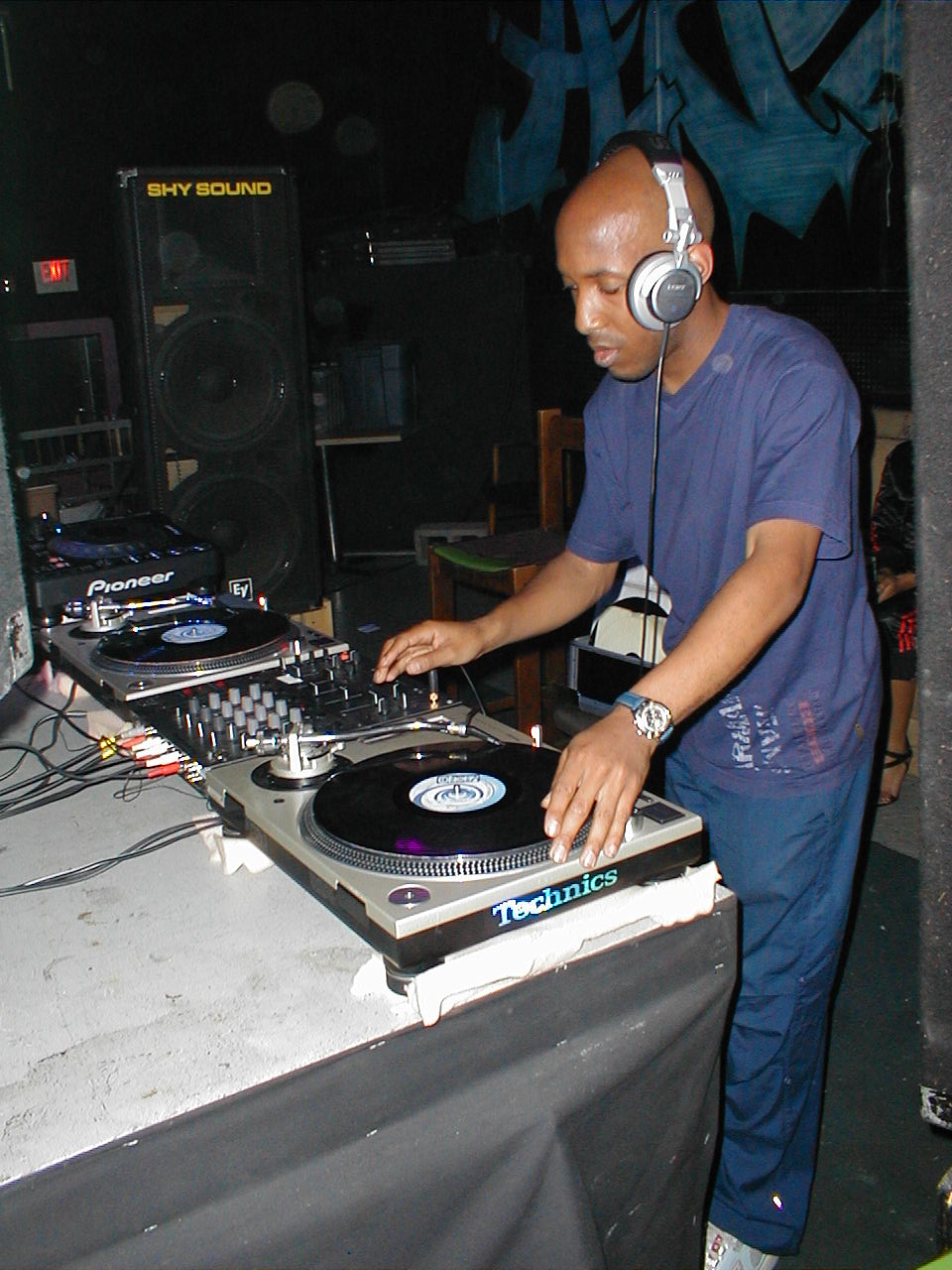
Photos: Congo Natty, Saverios1 · Shy FX, Alkivar

4 / 7 · Reggae in the break
Listen closely to early jungle and the Jamaican inheritance is everywhere. Wikipedia describes jungle as a genre that developed in the 1990s out of the UK rave scene and Jamaican sound system culture, characterised by rapid breakbeats and heavily syncopated percussive loops, combined with the deep basslines, melodies and vocal samples found in dub, reggae and dancehall, as well as hip hop and funk.
The reggae connection was there before jungle had a name. The same account notes that reggae samples and reggae influenced tracks had been a feature of many breakbeat hardcore records since 1990, particularly from producers such as Shut Up and Dance. As the early nineties rave scene began to fragment in 1992 and 1993, with piano and uplifting vocals pushing one strand towards happy hardcore and dark, industrial sounding samples producing another called darkcore, the strand that leaned into reggae and bass became jungle.
The tension between a slow bass and a fast breakbeat is one of the genre's defining tricks. A bass line that moves at roughly half the pace of the drums gives the music two speeds at once, so that you can nod to the slow bass or skank to the fast snare. It is a direct echo of reggae's heavy, spacious low end set against rapid rhythm.
Producers cut the samples into new shapes. A ragga vocal phrase became a hook. A dub siren became a signal for a drop. The result was something new, but anyone who knew the older music could hear where it came from.
5 / 7 · The rewind
Of all the sound system customs, the rewind is the one most often seen in a drum and bass club today. When the crowd loves a tune, the DJ pulls the record back and starts it again, and the room erupts. It is a simple, democratic form of applause, and it has survived the move from vinyl to digital.
The rewind says something important about the culture. The people on the floor decide what is good. A DJ can have the best records in the world, but the moment that matters is the one where the crowd tells them what it wants again. That relationship between selector and audience comes straight from the sound system, where the response of the crowd decided who won a clash.
It also explains why drum and bass DJs pay such close attention to the room. A set is not a playlist; it is a conversation. The selector plays a tune, watches the reaction, adjusts the next one. The MC adds a call. The crowd answers. When it works, there is a feeling that everyone in the room is part of one thing, and that feeling is the reason many people keep coming back.
Modern systems let a DJ rewind with a button rather than a hand on a record, but the instinct is the same. The next time you hear a rewind, notice who it is for. It is not for the DJ, and it is not for the artist. It is for the room.
6 / 7 · From the stack to the rave
The move from the sound system session to the rave was not a break but a continuation. By the early 1990s, many of the people who had grown up with Caribbean music in Britain were part of the new dance culture, and they brought the language and the technology with them. The same speaker stacks that carried reggae now carried breakbeat hardcore, and the same selectors learned to speed up.
Radio played its part. Wikipedia records that Kool FM first broadcast on 28 November 1991 on 94.5FM from Clapton in north east London, and describes it as generally regarded as instrumental in the development of the jungle scene. By late 1992 it was promoting its own events, which led to the founding of Jungle Fever in August 1993, at venues including the Astoria and The Edge. A pirate station that began as a signal over a city grew into a promoter, and the audience it had built walked into the rooms it created.
The result was a scene that moved quickly. Within a few years the sound had its own labels, its own clubs and its own records, and by the middle of the decade it had a name that would stick: drum and bass. But underneath the new vocabulary, the structure was familiar. A system, a selector, an MC, a crowd.
This is why so many of the genre's elders still talk about sound systems with something like reverence. It is not nostalgia. It is a recognition that the thing they build every weekend is a descendant of something older, and that the best way to honour it is to keep the principle intact.
7 / 7 · Where to dig
To hear the root for yourself, start with the reggae and dub that fed the scene. Listen to the way the bass sits, the space between the notes and the use of echo, and then play an early jungle record straight afterwards. You will hear the connection immediately.
Then listen to the records that sit at the junction. Shy FX and UK Apache's Original Nuttah is the obvious one, a ragga jungle classic with a sound system vocal. Goldie's Timeless shows how far the music travelled in a single year. Congo Natty's early records carry the sound system inheritance in their bones.
Find archive recordings if you can. Old pirate sets circulate online and make fascinating listening, with the MCs and the crowd noise intact. They are the closest thing to being there.
And go to a night with a proper rig. Stand near, but not too near, the speakers, and let the bass do what it was designed to do. It is the quickest history lesson there is, and the one that makes every other part of the story make sense.


Photos: Friction, Hilary Perkins · Roni Size, Eoindkelly · Goldie, public domain
The Labels That Built It
1 / 8 · The independents
Drum and bass was built by independent labels. Major record companies arrived late, and by the time they did, the scene's own imprints had already defined the sound. Most were run by a handful of people with a record shop connection, a pressing plant contact and a belief in what they were hearing in the clubs.
That independence is why the music could move so fast and stay so strange. A producer with a new idea could get a record out in weeks, and a label could take a chance on an unknown artist because the cost of a pressing was small. The result was a stream of experiments, most of which are forgotten, a few of which changed everything.
A label in this scene is more than a logo. It is a promise about taste. When a DJ says they are playing Metalheadz or Hospital or RAM, listeners know roughly what to expect. A producer signed to the right label gains an audience and credibility that no advertising could buy.
This Deep Dive follows six labels through three decades, from the rave years of the late 1980s to a thirtieth anniversary in 2026. Each one tells a different part of the story, and together they explain how a genre built in bedrooms became a worldwide culture.

2 / 8 · Reinforced
Reinforced Records was started in 1989 by Marc Mac of 4hero and Gus Lawrence, soon joined by Dego, also of 4hero, and Ian Bardouille. Wikipedia describes it as a British breakbeat hardcore, jungle and drum and bass label, based in Dollis Hill, London, and one of the groundbreaking labels of the genre.
Its first releases were all 4hero productions, including Mr Kirk's Nightmare, which sold more than 24,000 copies and, as the account puts it, truly launched the label. During the height of the rave scene in 1991 and 1992 it was prolific, releasing singles such as The Head Hunter and Cooking Up Yah Brain by 4hero and Feel Real Good, Oblivion (Head in the Clouds) and Rainbow People by Manix.
Reinforced matters for another reason. Its circle included a young Goldie, whom DJ Kemistry introduced to the label. He did design and artwork for Reinforced and then A and R, the work of finding and developing artists, and what he learned there fed directly into the label he would soon co found. In the early scene, the connections were that close.
The label's story is a reminder that drum and bass did not appear from nowhere. It grew out of the hardcore rave records that came before, and Reinforced was one of the places where that transformation happened.

3 / 8 · Moving Shadow and Good Looking
Moving Shadow began in 1990 in Rob Playford's home in Stevenage. Wikipedia explains that after his first three vinyl releases, Playford became a focal point for local young artists and bedroom producers who wanted advice on putting out their own music. The first release with a Shadow prefixed catalogue number came in 1991: the Psychotronic EP by Earth Leakage Trip. Moving Shadow enjoyed UK singles chart success in the rave years, and later became known as a breakbeat hardcore, jungle and drum and bass label.
Playford's name appears again in the story of Goldie's Timeless, where he did most of the programming and production. It is a good illustration of how the scene overlapped: a label founder was also an engineer for another artist's landmark record.
Good Looking Records, founded in 1991 by LTJ Bukem, went in a different direction. Wikipedia describes it as a jungle and drum and bass label that specialises in jazz influenced and atmospheric intelligent drum and bass. Artists who released on it include LTJ Bukem, Blame, Photek, Blu Mar Ten, Seba, Source Direct, Makoto, Q Project and Peshay.
Between them, Moving Shadow and Good Looking showed that the genre could be melodic and polished as well as raw. The sound they championed fed straight into the liquid drum and bass that is so popular today.
4 / 8 · RAM
RAM Records was established in 1992 by Andy C with the help of his friend Ant Miles. Wikipedia describes it as an independent label that specialises in drum and bass, run by Andy C and his business partner Scott Bourne, who is also known as Red One. It has lasted more than three decades with its founder still at the helm, which is unusual in an industry that burns through labels quickly.
The early 2000s were a defining period. Moving Fusion's Turbulence was, according to the account, instrumental in moving the label forward, and it was the number one voted track in drum and bass at the Mercury Music Prize in 2000. The label also became known for its club nights. The most famous started at the London nightclub The End and lasted eleven years until the club closed in December 2008. When the night moved to the superclub Matter in February 2009, attendance tripled from 1,000 to more than 3,000 within two months.
RAM's roster, as Wikipedia lists it, has included Chase and Status, Loadstar, Sub Focus and Wilkinson. For many fans, its sound is shorthand for the big, polished, dancefloor end of the genre.
The lesson of RAM is consistency. A label that releases strong records, runs a regular night and keeps its founder involved can last far longer than one that chases trends.

5 / 8 · Metalheadz
Metalheadz was founded in 1994 by Kemistry and Storm and by Goldie. Wikipedia describes it as a major drum and bass record label based in the United Kingdom, and its logo, a skull wearing headphones, is among the best known in dance music.
The origin of that image is a story worth telling. In his autobiography, Goldie explains that he took a 1991 design by Darren Bartlett and added headphones to the skull, so that the skull stood for the head and the headphones for the music, which he says will be here long after we are all gone. He has also said, in a web chat with The Guardian, that the design was inspired in part by the Wolverhampton Wanderers logo. Goldie credits Grooverider with coining the name Metalheadz.
The label has long been associated with darker, more experimental drum and bass, and with a regular club night that became a fixture of the scene. It still releases records in a numbered series, including recent EPs that we have covered in this magazine.
Metalheadz shows how a label can be a brand, a community and a standard of quality at once. When a producer is signed there, the logo means something.
6 / 8 · Hospital
Hospital Records was started in 1996 by Tony Colman, who records as London Elektricity, and Chris Goss. Wikipedia describes it as a British independent label based in East London that has grown to become one of the best known in UK dance music. It has been home to artists including Netsky, Camo and Krooked, Logistics, Nu:Tone, Metrik, Fred V and Grafix, High Contrast and S.P.Y.
In Shoreditch, East London, the company runs a publishing business called Songs in the Key of Knife and its worldwide events brand, Hospitality. Until the end of 2019 it also ran an experimental label, Med School Music. It is a good example of a label growing beyond records into a family of activities that support its artists.
In 2026 Hospital marks thirty years, with a Hospital30 box set of five white vinyl 12 inch records listed for release on 6 November and a birthday night in Brighton on 23 October. We cover both in this magazine.
The label's identity is closely tied to melodic, soulful drum and bass, but its roster has always been broader than any single label. That mixture of focus and range is a large part of why it has lasted.


Photos: High Contrast, Bizzurp · Logistics, · Nu:Tone, Tom Godber
7 / 8 · What a label does
In an age of streaming and self release, a label can look like an optional extra. Anyone can upload a track. But the labels in this story do work that nobody else will: curation, mastering, artwork, promotion, the vinyl run, the club night and the all important decision to say yes to an unknown artist.
Curation matters most. Thousands of tracks are released every week, and listeners need guides. A label that consistently releases records of a particular quality becomes a filter. You may not know the artist, but you trust the logo.
Labels also provide continuity. Artists come and go, sounds change, but an imprint can keep a thread running for decades. That continuity gives the scene a memory, and it gives new artists something to measure themselves against.
Many of today's best producers can name the label that first took a chance on them. It is one of the reasons the scene still talks about imprints with such loyalty.
8 / 8 · Where to dig
Pick a label and follow its catalogue in order. Hospital, Metalheadz, RAM and Good Looking all keep deep back catalogues on streaming services, and listening label by label is the best way to understand how the different sounds were built.
Start with the earliest releases you can find, and notice how quickly the music changes. In the rave years, the gap between a record from 1991 and one from 1993 can be enormous. Then follow the thread forward until you reach the label's current releases.
Visit independent record shops where you can. Many keep sections for drum and bass, and the staff are often the best guides you will find. Ask what is new on the labels you like, and what is good on labels you do not know.
Finally, support the labels you love. Buy the records, go to the nights and tell your friends. Independence is only sustainable if the people who value it are prepared to pay for it.
Pirate Radio and the Sound of London
1 / 8 · The aerial
Before streaming, before playlists, before social media, there was the rooftop aerial. Unlicensed pirate stations gave jungle and drum and bass a broadcast home when legal radio would not touch it, and they let a young DJ be heard across an entire city from a flat, a transmitter and a stack of records.
The stations were fragile. They moved studios, changed frequencies and lost equipment to raids. But they were also powerful, because they reached people who would never visit a club. A listener in a bedroom could hear a DJ and an MC working together, and could learn the names of the tunes that shaped a scene.
That role as an engine of discovery is why pirate radio sits at the centre of so many drum and bass stories. It was where new tunes were tested, where DJs built reputations, and where an audience learned that a new sound existed.
This Deep Dive follows the stations that mattered, the people who used them and the way their influence has continued into the age of online radio and podcasts.

2 / 8 · Kool FM
Kool FM, also known as Kool London, is the station most closely tied to jungle. Wikipedia says it first broadcast on 28 November 1991 on 94.5FM from Clapton, north east London, and that Kool itself has said it was the very first pirate station ever to play hardcore jungle.
Writers on the scene have backed up its importance. Simon Reynolds called it London's ruling pirate station in his history of rave music, Energy Flash, and in State of Bass, Martin James considered it the single most important pirate station in jungle.
By late 1992 the station had started to promote its own events, leading to the founding of Jungle Fever in August 1993. Nights were held at venues including the Astoria and The Edge. The station had turned its audience into a crowd.
Kool is now a former pirate that broadcasts on DAB and online, still playing jungle, drum and bass and old skool. Labels such as Metalheadz have had shows on it in recent months, and the station's thirty fifth anniversary falls on 28 November 2026.
3 / 8 · Rinse FM
Rinse FM took a different route to the same place. Wikipedia says it was founded in 1994 by Geeneus and Slimzee, with its first broadcast in September of that year, and that for three years in its early days the studio was hosted in Slimzee's house. It operated as a pirate until it was awarded a broadcast licence in June 2010.
The station is described as London's biggest pirate radio station and played garage, grime, dubstep, house, jungle, UK funky and other dance music. It gave early exposure to grime artists Dizzee Rascal and Wiley, and later became a home for dubstep DJs including Skream, Kode9 and DJ Oneman. Jungle remains on its list.
For drum and bass fans, the point is that the sounds of British bass music were never separate. The same stations, venues and DJs moved across genres, and the same listeners followed them. A listener who tuned in for garage might hear jungle in the next hour and end up loving both.
Rinse's move from pirate to licensed station is also a sign of how far the culture travelled. What began as an illegal signal from a living room became a fixture of British broadcasting without losing its character.
4 / 8 · Behind the counter
Pirate radio and record shops worked as a pair. A DJ found a tune in a shop, played it on the radio, and listeners went to the shop the next day asking for it. The shop was the library, and the station was the megaphone.
Nicky Blackmarket sits at the join between the two. He began DJing in the 1980s and played on London pirate stations including Pulse FM and Eruption FM, and he co owned the independent shop Blackmarket Records in Soho, where in the early 1990s he set up a breakbeat department that grew into drum and bass. The shop on D'Arblay Street became a hub, a place where test pressings and exclusive dubplates changed hands.
DJ Hype tells a similar story from another direction. He began producing in 1989 and hosted a show on the pirate station Fantasy FM, famed for his mixing and scratching. By 1994 he was a big name at breakbeat hardcore and jungle raves, winning Best Male DJ and Best Radio DJ at the Hardcore Awards in 1994 and 1995, and he hosted a show on the legal station Kiss 100.
These careers show how closely the worlds overlapped. The shop, the station and the club fed each other, and the people who ran them were often the same people.

Photos: Nicky Blackmarket, · DJ Hype, Adam J Roberts

5 / 8 · The tape pack
A pirate show lasted two hours and then vanished into the air, unless somebody taped it. Many people did. A cassette of a good set travelled from London to Bristol, to Birmingham, to Manchester, passing from friend to friend and carrying the sound of the capital and the voices of its MCs to cities that had no station of their own.
In that sense the tape pack was an early form of file sharing, and it built the scene's audience far from the capital. Fans traded tapes as they would trade records, and a good recording could be played in a car, in a bedroom, in a pub until the tape wore out.
The sound was imperfect. Hiss, drop outs and the sound of a presenter turning to answer a phone were part of it. But that imperfection was part of the charm, and listeners who grew up with those tapes often say the music has never sounded as good since.
Today, archives of pirate sets circulate online, and they are among the most precious documents the scene has. They preserve the voices, the tunes and the atmosphere of rooms that no longer exist.
6 / 8 · The cost of being loud
Unlicensed broadcasting carried real risks. Stations could lose their equipment in raids, and presenters could be prosecuted. Aerials were hidden on tower blocks, studios were moved at short notice, and the pressure was constant.
Some stations dealt with this by moving towards legality. Rinse FM did so in 2010. Others were absorbed into legal broadcasters or found new homes online. Several of the best known names in the scene began on pirate stations and went on to careers on mainstream radio.
The story is not purely heroic. Pirate stations could be chaotic, commercial and competitive, and there were disputes as well as friendships. But for many fans, what they remember is the sense of discovery.
It is worth remembering that these were communities. They were built by volunteers who cared about the music and gave their time, equipment and sometimes their money to put it on air.
7 / 8 · Today's version
The rooftop aerial has largely given way to online radio, podcasts and streamed sets, but the format is the same: a DJ, a microphone, a run of new records and a listener who stays tuned to find out what comes next.
Many of today's most useful sources of new drum and bass are radio shows. Labels run their own, DJs record weekly mixes, and a track played on a respected show can reach thousands of people in a night. The speed of discovery is faster than ever, but the principle is the same as it was in 1991.
There is also a renewed appetite for the old stations. Kool and Rinse both broadcast on digital platforms, and listeners can hear shows live or on demand. For anyone curious about the history, they are living archives.
Next time you are looking for something new, try a show before you try an algorithm. A person who has chosen the tunes and put them in order tells you something no recommendation engine can.
8 / 8 · Where to dig
Archived pirate sets from the 1990s are easy to find online. Search for full shows rather than single tunes, and listen for how the DJ builds a night, how the MC responds and how the energy changes from the first hour to the last.
Listen to the stations that exist today. Kool and Rinse are both still broadcasting, and label shows such as those from Metalheadz offer a good way into the current scene.
Read the histories. Simon Reynolds's Energy Flash and Martin James's State of Bass are frequently cited and offer detailed accounts of how the scene developed.
And if you ever get the chance to speak to someone who was there, ask them what the first time they heard jungle on the radio was like. The answers are usually vivid, and they tell you more than any list of dates.
The Albums That Changed the Room
1 / 8 · From the 12 inch to the long player
For its first years, jungle was a singles culture. The 12 inch ruled, the dancefloor chose the hits and records were designed to be played in a mix. An album was a luxury, and few expected one to matter.
That changed when a small number of artists made records that held together as complete works. They used the whole length of a disc to build moods, tell stories and show the range of the music. The audience that listened to them was no longer confined to clubs. People played them at home, on headphones, in cars.
The albums in this feature are not the only important ones, and everyone has their own list. But each marks a moment when the genre widened its ambitions and reached a new audience. Read together, they form a short history of drum and bass in records.
We have kept to well documented facts: release dates, chart positions, awards. Where a record is called groundbreaking, we say who calls it that.
2 / 8 · Timeless
Goldie's Timeless was released on 7 August 1995 through FFRR Records. Wikipedia describes it as his debut studio album and as widely regarded as a groundbreaking release in the history of drum and bass music. It entered the UK album chart at number 7.
The record was made with a team. Rob Playford, the founder of Moving Shadow, did most of the programming and production, with Goldie supplying the musical ideas, rhythms and arrangements. Additional engineering and production came from Dillinja and from Dego and Marc Mac of 4hero, and Diane Charlemagne and Lorna Harris contributed the bulk of the vocals.
What made it stand out was ambition. The title track runs for a long time and moves through several parts, and the album as a whole uses vocals, strings and cinematic textures alongside the breakbeats. It said that jungle could be serious, long form music.
Many people who now love drum and bass can name the moment they first heard it. For a generation, Timeless was that moment.
3 / 8 · Logical Progression and the calm side
While Goldie pushed towards the cinematic, LTJ Bukem was building a quieter path. His Logical Progression compilations, released through his Good Looking label in the mid 1990s, collected the jazz tinged, atmospheric strand of the music that he and his label championed.
Bukem was trained as a classical pianist and discovered jazz fusion as a teenager. That musical education shows in the records he made and the records he chose. Wikipedia names his 1995 track Horizons as his most notable release.
The compilations showed that jungle and drum and bass did not have to be aggressive to be powerful. They worked in a club, but they also worked at home, and they opened the genre to listeners who had never been to a rave.
The sound that Good Looking championed fed into the liquid drum and bass that would become one of the most popular strands of the genre.
4 / 8 · New Forms
On 23 June 1997 Roni Size and Reprazent released their debut album, New Forms, through Talkin' Loud. Wikipedia describes it as a critical and commercial success that won the 1997 Mercury Prize and certified platinum in the UK, and notes that it is often cited as the group's magnum opus.
Four singles were taken from it, Share the Fall, Heroes, Brown Paper Bag and Watching Windows, and all four entered the UK singles chart, with vocals from Onallee. Production credits go to Roni Size, Krust, DJ Die and Suv.
The Mercury Prize is awarded each year for the best album by a British or Irish act, and the twelve albums on its shortlist are chosen on their merits. For a genre that had grown up on pirate radio and in clubs, a win was a moment of recognition from the wider music world.
The record's sound blended live instruments with drum and bass rhythms, with double bass, drums, vocals and electronics. It is still one of the most frequently named starting points for new listeners.
5 / 8 · Wormhole and the dark side
Not every important album was gentle. Ed Rush and Optical's Wormhole, released in 1998 on Virus Recordings, pointed the music in a very different direction. Their earlier single Funktion, issued in 1997 on V Recordings, is named in Wikipedia's account of neurofunk as one of the early examples of the style diverging from techstep.
The critic Simon Reynolds, who coined the term neurofunk in a December 1997 article in The Wire, distinguished the style from techstep by its cleaner production, intricate basslines and emphasis on subtle changes in timbre, along with a shift towards more regular two step rhythms.
Wormhole showed what a cold, precise, technical record could sound like in full album form. It influenced a generation of producers, particularly in the Netherlands, who took the ideas further.
If Timeless was a statement of ambition, Wormhole was a statement of rigour. Both widened what the genre could be.
6 / 8 · The crossover years
In the 2000s, drum and bass albums began to reach larger audiences. High Contrast's debut, True Colours, came out on Hospital Records in June 2002, and his 2007 album Tough Guys Don't Dance is credited with bringing liquid drum and bass back to the mainstream. His 2009 album Confidential reached BPI gold certification, which means 100,000 sales in the UK.
Pendulum's Hold Your Colour, released on 25 July 2005, mixed drum and bass with rock instruments and vocals. Its single Slam was the first Pendulum release to reach the UK top 40, and the album introduced many rock and festival listeners to the scene.
Netsky's self titled debut, released by Hospital on 31 May 2010, and Sub Focus's debut, released on 12 October 2009, showed that new artists could build large audiences from the first record. In 2024, Chase and Status had a UK number one single with Backbone and won a Brit Award for Producer of the Year.
None of this was inevitable. Each record found its audience because it offered something people had not heard, and because the scene around it was strong enough to carry it.
7 / 8 · The revival
The most recent chapter belongs to a new generation. Nia Archives, who released three self released EPs between 2021 and 2023, saw the last of them, Sunrise Bang Ur Head Against the Wall, top the UK Dance Albums Chart. Her debut album, Silence Is Loud, released through Island in 2024, peaked at number 16 on the UK Albums Chart, and Wikipedia describes her as generally regarded as being at the forefront of the post 2020 drum and bass revival.
Her approach, which combines jungle breakbeats with songwriting and vocals, shows how the album form can still bring new people to the scene. Records like hers keep the genre moving, and the audience that discovers it through her work often goes on to explore the older records.
It is a pattern that has repeated through the genre's history. A record reaches beyond the club, brings new listeners, and sends them back through the catalogue.
The albums here are only a few of the many that matter. They are, however, a good place to begin a journey.
8 / 8 · Where to dig
Start with Timeless, Logical Progression and New Forms, and play them in order. Listen for what they share and where they differ. Then add Wormhole to hear the darker side, and Hold Your Colour or True Colours for the crossover years.
Follow your taste from there. If the cinematic ambition of Timeless appeals, listen to more from the Metalheadz catalogue. If the melody of Bukem attracts you, explore Hospital and the liquid labels. If the precision of Wormhole thrills you, follow the neurofunk line towards the Dutch producers.
Listen to albums as albums. Streaming makes it easy to skip, but a good record rewards listening from beginning to end, in order, without distraction.
And when you hear a new album that grabs you, tell someone. Albums are discovered by word of mouth, and that is how most of the records in this feature found their audience.
Liquid, and the Soul in the Machine
1 / 7 · The other side
Not all drum and bass is built for aggression. Alongside the dark rollers and the heavy neuro, a strand of the music grew up around warm chords, jazz harmony and soulful vocals, and it became known as liquid. Its fans value feeling over force, and its best records can hold a room as firmly as any heavy bassline.
The style has been through many phases. It has been dismissed as too soft, embraced by a huge audience, and rediscovered by younger producers who bring their own ideas to it. Through all of that, a few things have stayed the same: melody comes first, the drums roll rather than hit, and a human voice is often at the centre.
This Deep Dive follows liquid from its early roots to the present. It looks at the label that made it famous, the producers who defined it, the radio show that gave it a name, and the reasons it remains one of the most loved forms of drum and bass.
It is also a reminder that the genre is a family. The same dancefloor that goes wild for a neurofunk drop will often sing along to a liquid anthem, and many of the best nights mix the two.
2 / 7 · The early shape
Many trace the roots of liquid to the atmospheric jungle of the mid 1990s. LTJ Bukem and his Good Looking label, founded in 1991, championed what Wikipedia describes as jazz influenced and atmospheric intelligent drum and bass, with soft pads, piano chords and smooth breakbeats. Artists on the label included Blame, Photek, Blu Mar Ten, Seba, Source Direct, Makoto, Q Project and Peshay.
Bukem's own background explains the sound. He trained as a classical pianist and discovered jazz fusion in his teens, even playing in a jazz funk band before turning to DJing. His 1995 track Horizons remains one of his best known records.
The music this scene produced was meant for listening as much as dancing. It sat comfortably at home, which gave it a following among people who rarely visited a club, and that audience was crucial to its growth.
The name itself arrived later. The Wikipedia account of liquid funk says the style began in the UK in 1999, when the DJ Fabio and Sarah Sandy released a compilation called Liquid Funk on their Creative Source label.
3 / 7 · A name and a radio show
A genre needs a name, and it also needs a place to be heard. Liquid had both. Fabio's Liquid Funk compilation gave it a label, and his BBC Radio 1 show of the same name gave it an audience. Calibre, the Belfast producer, benefited most directly. Wikipedia explains that many of his productions, some of them unreleased at the time, became synonymous with liquid funk because Fabio played most of them on the show and at Swerve club nights in the early 2000s.
Swerve was originally known as Speed and was co run with LTJ Bukem, which shows how closely the early liquid scene was woven together. Calibre's work was eventually collected on the Shelflife series of albums on his own Signature Records, beginning in 2007.
That sequence, a radio show, a club night and a label, is how most scenes grow. Someone makes the music, someone plays it, someone gives people a place to hear it together, and eventually the music is released for anyone to own.
Calibre is also notable for one odd fact. According to UKF, as Wikipedia reports, none of his productions have been officially remixed by other artists, and he has said he is unbothered about bootleg remixes. It suggests a producer whose tunes feel complete as they are.

4 / 7 · A home at Hospital
Hospital Records, founded in 1996 by Tony Colman, who records as London Elektricity, and Chris Goss, became the label most closely associated with liquid. Wikipedia describes it as a British independent label based in East London, primarily releasing drum and bass, which has grown to become one of the best known in UK dance music. Its artists have included Netsky, Camo and Krooked, Logistics, Nu:Tone, Metrik, Fred V and Grafix, High Contrast and S.P.Y.
It was High Contrast who made the biggest impact. A Welsh producer from Penarth near Cardiff, he cited film soundtracks including A Clockwork Orange and Blade Runner as defining influences. His debut album True Colours came out on Hospital in June 2002, and his 2007 album Tough Guys Don't Dance is credited with bringing liquid back to the mainstream. His 2009 album Confidential reached BPI gold certification.
Netsky followed. The Belgian producer signed to Hospital in late 2009, after being influenced by a High Contrast remix, and was nominated as Best Upcoming Producer at the 2010 Drum and Bass Arena Awards within months of his first release. Hospital put out his self titled debut on 31 May 2010.
The label's strength has been its consistency. For three decades it has found melodic, soulful drum and bass and presented it with care, and in doing so it has made a home for many of the scene's best loved artists.
Photos: High Contrast, Bizzurp · Logistics, · Nu:Tone, Tom Godber
5 / 7 · By 2005, a best seller
The numbers show how far liquid travelled. Adoption was slow at first, but the style grew massively in popularity around 2003 and 2004, and by 2005 it was one of the biggest selling subgenres of drum and bass. Its audience was wider than the club scene, and its sound was easier for newcomers to love.
The characteristics are easy to hear. Fewer bar oriented samples, more instrumental layers, both synthesised and natural, with harmonies, melodies and atmosphere. Jazz, soul and blues are the main influences, joined by ambient, funk, disco, house, soca and Latin sounds.
That openness is part of why the style has lasted. Producers draw from anywhere, and the result is a sound that keeps changing without losing its identity.
Artists named in the standard accounts include Netsky, LTJ Bukem, High Contrast, Logistics, London Elektricity, DJ Marky and Calibre, and the labels include Hospital, Good Looking, Creative Source, Fokuz Recordings and Shogun Limited. It is a good listening list for anyone wanting to begin.

6 / 7 · On the floor
Liquid is not just for headphones. In a festival field on a summer afternoon, or a club at the start of the night, a rolling liquid set can be as powerful as any heavier sound. The warmth of a chord, the lift of a vocal and the swing of the drums can move a crowd in a different, gentler way.
It is also often the strand that welcomes newcomers. A first time visitor may be daunted by a wall of bass, but a soulful tune with a singer and a steady groove makes the music feel familiar. Many people who now love the harder styles came in through liquid.
Good DJs know how to use it. A liquid passage can open a set, give a crowd room to breathe in the middle, or bring them gently back down at the end. In a night that runs for several hours, that range is a valuable tool.
The best liquid records are also expert at building emotion. A breakdown that makes everyone sing, a drop that arrives exactly when the room wants it: these are skills as demanding as any in the genre.
7 / 7 · Where to dig
Hospital's catalogue is the obvious starting point. Its website, its streaming pages and its SoundCloud account are good ways to hear what it is releasing now, and its back catalogue shows how the sound has developed over thirty years.
Follow with Good Looking's early compilations and the work of Calibre, Lenzman, Nu:Tone and Makoto. Listen to the same tunes across different eras and notice what stays the same: the roll of the drums, the warmth of the bass and the care taken over the melody.
Listen to full albums where you can. High Contrast's True Colours and Confidential, and Netsky's debut, give a sense of how liquid works as a long form record.
And try it live. A good liquid night is a gentle, joyful thing, and it is one of the best ways to discover why people love the style so much.
Photos: Nu:Tone, Tom Godber
Neurofunk and the Dark Side
1 / 7 · The machine takes over
In the middle of the 1990s, a colder strand of drum and bass emerged. Built from tight sound design, cold basslines and mechanical drums, it was dark, technical and relentless. It would eventually be called techstep, and from it a more intricate cousin, neurofunk, would grow.
These styles are the darker end of the genre, and they have an intensity that polarises people. To some listeners they are the purest form of the music, an exercise in precision and pressure. To others they are too hard to love. But their influence runs through almost everything that has been made since, including the records that sound nothing like them.
This Deep Dive follows the line from techstep to neurofunk, introduces the producers who defined it, and asks why the sound remains so compelling.
It is a story about technology, but also about a certain mood: a sci fi sense of dread and excitement that suits the dancefloor surprisingly well.
2 / 7 · Techstep
Wikipedia describes techstep as a dark subgenre of drum and bass created in the mid 1990s. It is characterised by a dark, sci fi mood, the near exclusive use of synthesised or sampled sound sources, hardstep kicks and snares, and influences from industrial and techno music, a sound some writers have called clinical.
The account adds an important caution: although described as techy, its relationship with techno should not be overstated. It shares the technique of building a high energy collage from abstract synthetic noises, but it usually keeps to drum and bass norms, especially structure and the emphasis on the drop.
Techstep also changed what producers wanted from bass. Jungle's obsession had been low and deep. Techstep explored timbre, with artists competing to outdo each other with ever more distorted and twisted bass sounds. The Reese bass, a thick, detuned sound that began in Detroit techno in 1988, became a basic tool for this work.
The style developed from jungle and hardstep around 1995, and the mood it created has remained a reference point for dark drum and bass ever since.
3 / 7 · The critic and the name
Neurofunk has a more precise birth date. Wikipedia says the music critic Simon Reynolds coined the term in a December 1997 article in The Wire and discussed it in his 1998 book Energy Flash. He described it as a stylistic shift from techstep and as the fun free culmination of jungle's strategy of cultural resistance, the eroticisation of anxiety.
Early examples of the style diverging from techstep include Ed Rush and Optical's single Funktion, from 1997 on V Recordings, and their first album Wormhole, from 1998 on Virus Recordings. Reynolds distinguished the emerging style by its cleaner production, intricate basslines and emphasis on subtle changes in timbre, along with a move towards more regular two step rhythms.
As Wikipedia notes, there is no clearly defined and agreed explanation of how neurofunk evolved after that, as with any subgenre. But the broad outline is clear: a darker, more machine like sound that became smoother, cleaner and more complex.
It is worth noting that the name was applied from outside. Critics gave it, and producers adopted it, as often happens in dance music. The sound came first, and the label followed.
4 / 7 · The Dutch wave
In the 2000s, producers in the Netherlands pushed the sound further. Black Sun Empire formed in Utrecht in 1997 from the producers Rene Verdult and the brothers Micha and Milan Heyboer. They had known each other since childhood, were first exposed to jungle as teenagers in the mid 1990s, and started producing together in 1993. Their debut 12 inch, Voltage and Skin Deep, came out on Piruh Records in 1999, and in 2002 they set up their own label.
Wikipedia reports that the group has released six full length albums and has operated three independent labels, and that critics have called them the kings of all things neuro. It is a strong claim, but few would argue with their influence.
Noisia, from Groningen, took a different route. The trio of Nik Roos, Martijn van Sonderen and Thijs de Vlieger moved between drum and bass, dubstep, breakbeat and house, released on labels well outside the scene, worked on video game soundtracks and produced albums for other artists. Their sound design became a reference for producers in every style.
Between them, they showed that the Dutch scene could shape the genre as strongly as the British one had.
5 / 7 · Sound design as a craft
Neurofunk made the producer's technical skill part of the appeal. Listeners talk about the snare, the Reese, the way a sound twists and morphs across a bar. A good track can be dissected on a good system, and fans reward producers who show control.
That craft is demanding. A neuro bass may start as a simple wave and pass through layers of filtering, distortion, modulation and processing before it sounds right. A snare may be assembled from several recorded sounds and tuned to the track's key. A mixdown has to keep all of this clear while the low end stays powerful and the stereo field stays controlled.
The result is music that rewards close listening. Many fans of the style use it to test speakers and headphones, and producers share breakdowns of their techniques as eagerly as they share tunes.
It is also why the style has an enormous influence beyond its own audience. Producers in other genres borrow its sound design ideas, and drum and bass makers of every kind pay attention to what the neuro scene is doing.
6 / 7 · Why it works live
On a large system, the sub bass and precision of neurofunk create an almost physical impact. The drums are tight, the bass is huge and the silence between hits is as important as the hits themselves. A good set can feel like a controlled storm.
The crowd responds in kind. Neuro nights are often intense and focused, with fans standing near the speakers and following every move. It is not a polite atmosphere, but it is a respectful one, and the community around it is among the most dedicated in the scene.
Good selectors know how to pace it. A whole night of the darkest music can be draining, so many programme a build, from rolling to heavier to harder, with moments of relief. The craft of sequencing is as important as the tunes.
If you are new to it, go with friends, wear earplugs and keep a little distance from the stack. The experience can be thrilling, and you will hear details in the sound that you might miss anywhere else.

7 / 7 · Where to dig
Begin with Ed Rush and Optical's Funktion and Wormhole, then follow the thread to Black Sun Empire and Noisia, and on to the current generation, including Mefjus, Phace and Alix Perez, who have taken the form in new directions with half time sections, minimal textures and more space.
Streaming playlists labelled neurofunk are a useful start, but seek out full albums to hear how artists pace a long listen. Our own guide to neurofunk explains the term and its history, and our Fifty Cuts Deep section lists new releases month by month.
Listen on the best system you can. The details that make the style special, the detail in the bass and the precision of the drums, are easy to lose on a phone speaker.
And if a Noisia show comes to your city, go. The group's reunion at the Melkweg in Amsterdam is listed for 4 December, and for many fans it will be one of the nights of the year.
A Sound That Left the Island
1 / 7 · From London to the world
Drum and bass was born in Britain, and the story of its first years is largely a British one: pirate stations in London, labels in Hertfordshire and Hackney, clubs in Bristol and the Midlands. But within a few years of its birth, DJs and producers on other continents had picked it up and begun making it their own.
Today the picture is very different. Some of the best known names in the genre are Dutch, Belgian, Austrian or Australian. The biggest festivals are in the Czech Republic, Belgium, Croatia and the Netherlands. Fans fly from Britain to hear the music in a field in central Europe, and fans from across Europe come to Britain for the weekenders.
This Deep Dive traces that journey and asks what travelled and what changed. It argues that the sound's success abroad is not a story of imitation but of exchange, with each country adding something to a language that began in London.
It is also a story about people, the producers, promoters and fans who carried the music across borders and built scenes of their own.
.jpg?width=1200)
2 / 7 · The Dutch connection
The Netherlands became one of drum and bass's most important second homes. Black Sun Empire, formed in Utrecht in 1997, and Noisia, from Groningen, are now known worldwide, and their influence on sound design reaches far beyond their own scene.
The Dutch scene also built infrastructure. Liquicity Festival, which is listed for 23 to 25 July 2027 at Geestmerambacht in Oudkarspel, has become a destination for fans of the melodic end of the genre, with gates open from 11 in the morning until midnight. Labels, promoters and radio shows have followed.
The result is a scene with its own character. Dutch producers have a reputation for precision and for technical innovation, and Dutch crowds are known for their energy and their loyalty. For British artists, a Dutch date is often a highlight of the year.
The country's influence on the genre is easiest to hear in neurofunk, where the Dutch wave of the 2000s set a standard that producers everywhere still follow.
3 / 7 · Belgium and Antwerp
Belgium has made its own contribution. Netsky, born Boris Daenen in 1989, began as a liquid producer in Belgium and signed to Hospital Records in late 2009, going on to a debut album in May 2010 and a second, titled 2, in June 2012.
Rampage, the Belgian event that has become one of the genre's best known festivals, returns to the AFAS Dome in Antwerp in March 2027, according to its announcement, with a weekend of drum and bass in one of the continent's major venues.
The Belgian scene shows how a smaller country can have a large effect. A single producer on a respected label, and a single festival with a clear identity, can make a nation part of the global conversation.
It also shows how the scene's exchange works in both directions. British labels sign Belgian artists, and Belgian events book British headliners, and each side benefits.
4 / 7 · Brazil and beyond
Brazil developed its own drum and bass community, with a deep love of the music and a long history of collaboration with British artists and labels. DJ Marky, from São Paulo, became one of the music's international stars, and his work with producers such as Makoto and with Hospital Records has made him a familiar name on both sides of the Atlantic.
The country's dance scene is large and varied, and large dance festivals such as Creamfields Brasil show the scale of the audience, even though they are not specialist events. Drum and bass has found its place within that world, with its own nights, its own stars and its own audience.
Elsewhere, the music has taken root in Australia, where the band Pendulum formed and went on to bring drum and bass to rock audiences with Hold Your Colour, in North America, where promoters and producers have built a strong scene, and in Eastern Europe, where the Czech Republic has become a major hub.
Every scene has added something. The result is a genre that sounds like many places at once.
5 / 7 · The Czech summit
Let It Roll, held at Lake Most in the Czech Republic, has become one of the biggest events in the genre's calendar. Its next edition is listed for 5 to 7 August 2027, with three day passes from 162 euros and camping and VIP options.
A festival of this size is as much a statement as an event. It shows that the audience for drum and bass in central Europe is large and committed enough to fill a lakeside site for three days, and that the scene's centre of gravity is no longer only in Britain.
For many British fans it has become a fixed point of the summer, a chance to hear the music in a different setting, among people from dozens of countries. The line-ups mix British and European names, and the atmosphere is celebrated for its warmth.
Not every fan can make the journey, but the festival's growth shows where the genre is heading: bigger, more international and more connected.
6 / 7 · A shared language
At around 170 to 175 beats per minute, the music needs little translation. A track from London lands the same way in Prague, São Paulo or Antwerp, and local artists add their own accents without losing the common pulse. That is part of why the scene has been able to spread so widely.
The shared language includes the rituals. The rewind, the MC, the dubplate and the bass drop are understood wherever the music is played. A fan who has been to nights in one country can walk into another and feel at home.
It also includes a sense of history. Wherever drum and bass is played, there is awareness of its roots in British sound system culture, in pirate radio and in the rave. The genre travels with its story.
That story is part of what makes it distinctive. It is not just a style but a culture with memory, and the culture goes wherever the music does.
7 / 7 · Where to dig
Explore the rosters of labels outside Britain, and follow artists you meet at festivals. Many of the best tunes of recent years have come from producers far from their British inspirations, and the exchange of ideas shows no sign of slowing.
Listen to Black Sun Empire and Noisia for the Dutch sound, Netsky for the Belgian liquid route, DJ Marky for the Brazilian connection and Pendulum for the Australian one. Then compare them with British artists such as Calibre, from Belfast, High Contrast, from Penarth in Wales, and Roni Size, from Bristol.
If you can, travel. A weekend at one of the European festivals is the best way to feel the scale of the scene, and the people you meet will tell you more about it than any article.
And keep an ear out for scenes you do not yet know. New cities and new countries are joining all the time, and the next big name may come from somewhere nobody expected.
Photos: Roni Size, Eoindkelly · Andy C, Stephen West
The Festival Summer
1 / 8 · From warehouse to field
Drum and bass was born indoors. It grew in the warehouses, basement clubs and rented halls of early nineties Britain, in places where the walls pushed the bass back at the crowd and the roof kept the heat in. For its first decade or so, the idea of the music living outdoors would have seemed odd. Those rooms were part of the sound.
Then the summers changed. Over the years the genre found its way onto festival fields, onto coastal sites and into the vast tents that now stand across Europe from May to September. A crowd that once squeezed into a club now arrives in a field, camps for the weekend and stays up to see the sun rise over the main stage. The music has not become gentler to fit; if anything the sound systems have grown bigger to cope with the open air.
What stays constant is the pattern of the night. A set builds, drops, rewinds and builds again, in a rhythm that is now familiar across hundreds of events. The setting is different, but the ritual is the same: gather, listen, shout when the bass comes in.
August is the centre of that season. It is when the largest outdoor gatherings take place, when travelling fans are away from work, and when the scene's calendar is at its busiest. This Deep Dive looks at how that summer works, from the sound systems on the streets of west London to the lakeside stages of the Czech Republic, and what it takes to enjoy it well.

2 / 8 · The British circuit
Britain still anchors the scene. Hospital Records, the East London label that is marking its thirtieth year in 2026, runs the events brand Hospitality, and nights billed under that name are among the best known in the country. Its Weekender, announced for 12 to 15 March 2027 at Butlin's Bognor Regis, takes over a holiday camp for four days, with four indoor arenas, on-site accommodation and a programme that stretches across liquid, neuro, jungle, jump up, minimal and rollers.
The announced names for that weekend give a sense of the range: Andy C, A.M.C, Kings of the Rollers, Dillinja, Mozey, Lens, DJ Flight and Flava D, with stage takeovers from labels and crews including Valve Sound System, Critical Sound, Virus Recordings and DnB Classics. It is for over 18s only, and packages start from 290 pounds per person with three nights' accommodation included.
That model, a weekend in one place with the music, the beds and the bar all within walking distance, has become a favourite for fans who want the festival feeling without a tent. It is also a reminder that the British season is not only a summer one. Outdoor fields dominate August, but indoor weekenders and city nights keep the calendar full through the cold months.
Across the country, regular nights in places such as Brighton, Leeds, Liverpool, Glasgow, Swansea and Newport keep the local scenes alive between the big dates. Our nights listings, drawn from On The Door, show how many are running on any given weekend, and the density of that calendar is one of the best measures of how healthy the genre is.
.jpg?width=1200)
3 / 8 · The sound system outdoors
To understand why outdoor drum and bass works at all, you have to understand the sound system. A sound system is not just loud speakers. It is a way of building a room of sound: stacks arranged to carry bass across a field, a selector who knows how to use them and an MC who speaks for the crowd. The tradition came to Britain with Caribbean migration, and it is still visible every August in the capital.
The Notting Hill Carnival has taken place on the streets of west London since 1966, over the August Bank Holiday weekend, and it attracts around two million people a year. Wikipedia describes it as one of the world's largest street festivals and the largest in Europe, led by members of the British Caribbean community. It lists five disciplines of carnival: masquerade, calypso, soca, steelpan and sound systems.
That last discipline matters to anyone who loves jungle and drum and bass. The huge speaker stacks, the weight of the bass in your chest and the call and response with the crowd are the same ingredients that the rave generation took and sped up. Walk past a carnival sound system and you are hearing the ancestor of every festival stage in this feature.
The lesson for outdoor drum and bass is practical as well as historical. Outdoors, bass disperses. A producer who mixes a track to sit tightly in a club needs to think about how it will carry in a field, and a DJ who plays a long, deep passage in a tent may find that the sound needs more weight to hold the crowd. The best operators treat the system as an instrument, and that is a skill that comes straight from the sound system tradition.
4 / 8 · Europe's big weekends
The British scene has always travelled, and in the last two decades the European festival has become a standard part of the calendar. Several events have grown large enough to be destinations in their own right, and the names are familiar to anyone who follows the genre.
Let It Roll, held at Lake Most in the Czech Republic, is one of the biggest. Its next edition is listed for 5 to 7 August 2027, with three day passes from 162 euros and camping and VIP options. Rampage Weekend returns to the AFAS Dome in Antwerp, Belgium, in March 2027, and the Dutch festival Liquicity is listed for 23 to 25 July 2027 at Geestmerambacht in Oudkarspel, with the gates open from 11 in the morning until midnight.
Further south, Outlook Festival has become known for its setting on the Croatian coast. It began as a subsidiary of the Leeds night SubDub, was held just outside Pula, in Fort Punta Christo, and moved to Tisno in 2020. It is unusual for putting sound systems in tunnels and in the moat of the ruins, and for its boat parties that sail around the Adriatic coastline. Many of the people who attend, and much of the team that runs it, come from the United Kingdom.
What these events share is scale and welcome. They bring together fans from many countries, and they give artists who might play to a few hundred people at home a chance to play to many thousands. For the scene, they are a shop window; for the fans, they are a holiday with a soundtrack.

5 / 8 · What a set sounds like in the sun
A drum and bass set at midnight in a club is built for tension. A set at five in the afternoon, in the open air, with the sun on the crowd, is a different job. The best selectors know it, and the way they build a daytime set is one of the quiet crafts of the festival season.
In the heat of the afternoon, many choose to start with rolling, melodic records, the liquid and soulful end of the genre, which suit open air and easy dancing. As the light fades, the music tends to harden. Rollers take over, then the darker and more technical records as night arrives. The shape follows the day, and good festival programmers plan their running orders to match it.
The MC's role changes too. Outdoors, the crowd is spread across a large space, and the voice on the microphone helps to bring people together. A good MC will call out the landmarks, welcome new arrivals and make a field of strangers feel like one room. The tradition goes back to the sound system, and it matters as much in a Czech field as it did on a Notting Hill street.
There is also the question of weather. Wind carries sound away. Rain turns a field into mud. Sudden heat leaves a crowd needing water. A professional crew accounts for all of these, from the height of the speaker towers to the cover over the decks. When a festival set goes well, much of the credit belongs to people the audience never sees.
6 / 8 · Looking after yourself
A festival weekend asks a lot of your body. You are on your feet for hours, in the sun or the rain, in a crowd, with a sound system pushing air at you. The people who enjoy it year after year are usually the ones who plan for that, and the advice has not changed much over the decades.
Start with your ears. Loud music over long periods can damage hearing, and the effects, which include ringing and dulled sound, do not always fade. Wear earplugs made for music, which cut the volume evenly without muffling the detail, and give your ears breaks away from the speakers. Do not stand directly in front of a bass stack for long.
Next, water and food. Festivals are hot and busy, and it is easy to forget to drink. Carry a refillable bottle where the site allows it, eat proper meals and be sensible about alcohol. Look after friends who seem unwell, and know where the welfare tents and medical points are. Good festivals publish this information in advance, and staff are there to help, not to judge.
Finally, plan the practical side. Check the age limit, since events such as Hospitality Weekender are over 18 only. Read the entry rules, bring ID and charge your phone. Agree a meeting point with your group in case you are separated. Know how you are getting home, because the last few hours of a festival are the worst time to start looking for transport.
7 / 8 · Choosing your weekend
With so many festivals now competing for attention, choosing one can feel overwhelming. A few simple questions make it easier. What kind of drum and bass do you love most? Do you want to camp, or would you rather have a bed? How far are you willing to travel, and what can you afford?
If you want a British weekend with everything in one place, look at the indoor weekenders. If you want the open-air experience and a bigger crowd, look to the European events at lakes and coasts. If you want a taste of the culture that made the music, find a sound system at a carnival. Each offers something different, and many fans do all three over a year.
Money matters. Three day passes at the larger European events are priced in euros and can start in the low hundreds, before travel, camping, food and drink. Packages that include accommodation, such as the Hospitality Weekender's, cost more up front but can work out sensibly once you add up the extras. Always check the organiser's own site for the current prices and the exact dates, since listings change.
Book early. Many festivals sell tickets months ahead, and the best accommodation goes quickly. Sign up to mailing lists and follow the official social accounts so that you hear first. And when you go, take the time to see artists you do not know. The line-ups are a fine map of where the genre is heading, and some of the best sets are the ones you wander into by accident.

8 / 8 · Where to dig
To prepare for a summer of drum and bass, start with the artists named on the line-ups and work outwards. Listen to Andy C, Dillinja and Kings of the Rollers for the rolling, heavy end. Try Lens and Mozey for a different texture. Follow the label takeovers, such as Critical and Virus, and listen to what their rosters are releasing now.
Then go further back. The festival sound is built on the records and clubs that came before it. Listen to Goldie's Timeless and Roni Size's New Forms for the albums that made the case for the genre, and to Shy FX and UK Apache's Original Nuttah for the sound system DNA that still runs through every set.
Finally, find a live recording. Many festivals post sets online, and listening to one from start to finish will show you how a good DJ builds a crowd across an hour. Pay attention to the first ten minutes, which are often the hardest, and to the last, which are often the best. When you eventually stand in the field yourself, you will recognise it.
The summer is short, and the scene's calendar is long. Mark the dates, tell your friends, bring your earplugs and enjoy it. The festival season is the clearest evidence we have that drum and bass has found its place in the open air.
Return of the Legends
1 / 7 · The return
They were the names on the flyers. Sanctuary, Dreamscape, Helter Skelter, Raindance, Labyrinth: the nights and venues that carried rave into jungle and drum and bass in the early 1990s. This feature goes back to what each one was, what the record says about it, and where it is now.
Everything here comes from a source we name on the slide. Where a date or a detail could not be confirmed, we have left it out.
Seven slides, one night at a time, starting with the building in Milton Keynes that held many of them.
Back to where it started.
2 / 7 · The Sanctuary
The Sanctuary Music Arena in Milton Keynes opened in December 1991 with a capacity of 4,000, later reduced to 3,500 after redevelopment in 1992.
Promoters who ran nights there included Dreamscape, Helter Skelter, Gatecrasher, Slammin Vinyl, Garage Nation, Sidewinder, Cream and Godskitchen.
It closed on 10 July 2004, with Slammin Vinyl hosting the final event, and was later demolished for an IKEA store. A 30 year exhibition about the venue was held at MK Gallery in January 2022.
Source: Wikipedia, Sanctuary Music Arena.
Open from 1991 to 2004.
3 / 7 · Dreamscape
ESP Promotions launched the first Dreamscape raves at the Sanctuary in December 1991 under founder Murray Beetson. The series ran from 1991 to 1998, with thirty nights across several venues.
Dreamscape has been brought back since. DJ Mag reported a reunion at the Milton Keynes National Bowl led by Jim Tang, with the headline that the legendary 90s rave was returning to Milton Keynes.
Sources: Wikipedia, Sanctuary Music Arena; DJ Mag, Legendary 90s rave Dreamscape to return for MK reunion.
Thirty nights, 1991 to 1998.

4 / 7 · Helter Skelter
David Pratley and his wife Penny founded Helter Skelter in September 1989, inspired by the early M25 orbital raves. Its nights ran regularly at the Sanctuary, and its biggest, Energy 97, drew 18,000 people to Turweston Aerodrome in Northamptonshire, with ten marquees and 85 artists playing hardcore, drum and bass and techno.
After the Sanctuary closed in 2004 the brand came back with drum and bass nights called Accelerated Culture, at venues including Bowlers in Manchester. In 2005 its Hardcore Classics compilation with Ministry of Sound reached number 2 on the UK compilation chart.
Source: Wikipedia, Helter Skelter (rave music promoter).
18,000 at Energy 97.
5 / 7 · Raindance
Raindance calls itself the original party crew, established in 1989, and has run nights from warehouse venues such as Jenkins Lane to fabric and the Hammersmith Apollo.
It keeps an archive too: Wheel and Come Again, with classic Raindance DJ sets and new mixes from acid house to drum and bass, and Cult to Culture, a project documenting UK rave history through photography and limited edition releases.
Its next night is Raindance Coming Home on 21 November 2026 at Eutopia Warehouse, listed as a return to its rave roots.
Sources: raindancerave.org; Skiddle, Raindance Rave Organisation.
Coming Home, 21 November 2026.

6 / 7 · Labyrinth
Labyrinth grew from roving warehouse raves run by Joe Wieczorek in the late 1980s into a club at the Four Aces Club on Dalston Lane in east London, working with the club's Newton Dunbar. It championed acid house, hardcore and jungle to a crowd mixed across race and sexuality.
Hackney council shut the club in 1997, and the site is now part of the Dalston Square development. It later ran in Tottenham for two years. After a long break, nights began again, started when a close friend and Labyrinth DJ, Ginge, fell ill and the old crew reunited.
A Facebook memorial page for Labyrinth drew around 15,000 followers, according to Wieczorek in 2017.
Sources: Vice, Looking back at Labyrinth, the east London rave that still lives long in the memory (June 2017); Vice, The Four Aces Club was the jewel in Dalston's crown.
Shut in 1997, revived since.
7 / 7 · Where to dig
If this feature makes you want to go further, these are the places that hold the record: the MK Gallery exhibition about the Sanctuary, Raindance's Wheel and Come Again mixes and Cult to Culture archive, the Labyrinth memorial page, and the Hardcore Classics compilation from Helter Skelter and Ministry of Sound.
We have not been able to confirm details of every night people ask about, Orange among them. If you have a flyer, a date or a source for one, send it through our submit page and we will add it.
Next month the feature changes. Use the chevrons at the top to move between months.
Send us what you remember.
The Sound That Never
Assimilated
1 / 7 · The break
It began with a stolen breakbeat. The six-second Amen drum fill, lifted from a 1969 Washington D.C. funk record, became the backbone of a genre that would redefine what electronic music could be. By 1994, they called it drum and bass.
Three decades on, the scene has fractured into an ecosystem that runs from jazz-inflected liquid DnB to the clinical aggression of neurofunk, from crowd-ready jump-up to the structural minimalism of South London's deep rollers.
Goldie's Timeless, Shy FX's Original Nuttah, Calibre's two decades of prolific liquid output: these are not footnotes to electronic music history. They are its spine.
Drum and bass was never interested in behaving itself. It could be beautiful and violent within the space of a single record, soulful one moment and completely alien the next. That contradiction became its strength.

Photos: Congo Natty, Saverios1 · Fabio & Grooverider, (Alkivar · LTJ Bukem, Lazz R · Shy FX, Alkivar · Roni Size, Eoindkelly · Friction, Hilary Perkins
Six Subgenres Worth Knowing
Liquid · Neurofunk · Rollers · Jungle · Techstep · Jump-UpThe Producers Who Built The Floor
Goldie · Andy C · LTJ Bukem · Shy FX · Calibre · SkepticalLabels That Kept The Culture Honest
Metalheadz · RAM · V Recordings · Hospital · Shogun Audio2 / 7 · The ecosystem
Liquid drum and bass can be delicate, melodic and deeply atmospheric, drawing on jazz, soul and sophisticated electronic production. Neurofunk can sound almost surgical: distorted basses, intricate percussion, an obsession with technical precision.
Jump up is built for crowded rooms and the instinctive physical response of a dancefloor. Deep rollers strip things back and let space, groove and subtle movement do the work.
And those are only some of the branches. There are producers who build entire worlds from a handful of drums, and DJs who can turn a room inside out with a single transition. There are labels whose catalogues have become historical documents in their own right, and radio stations, record shops, promoters, festivals and independent artists who kept the culture moving long after the mainstream decided it had understood it.
It has never stopped changing.
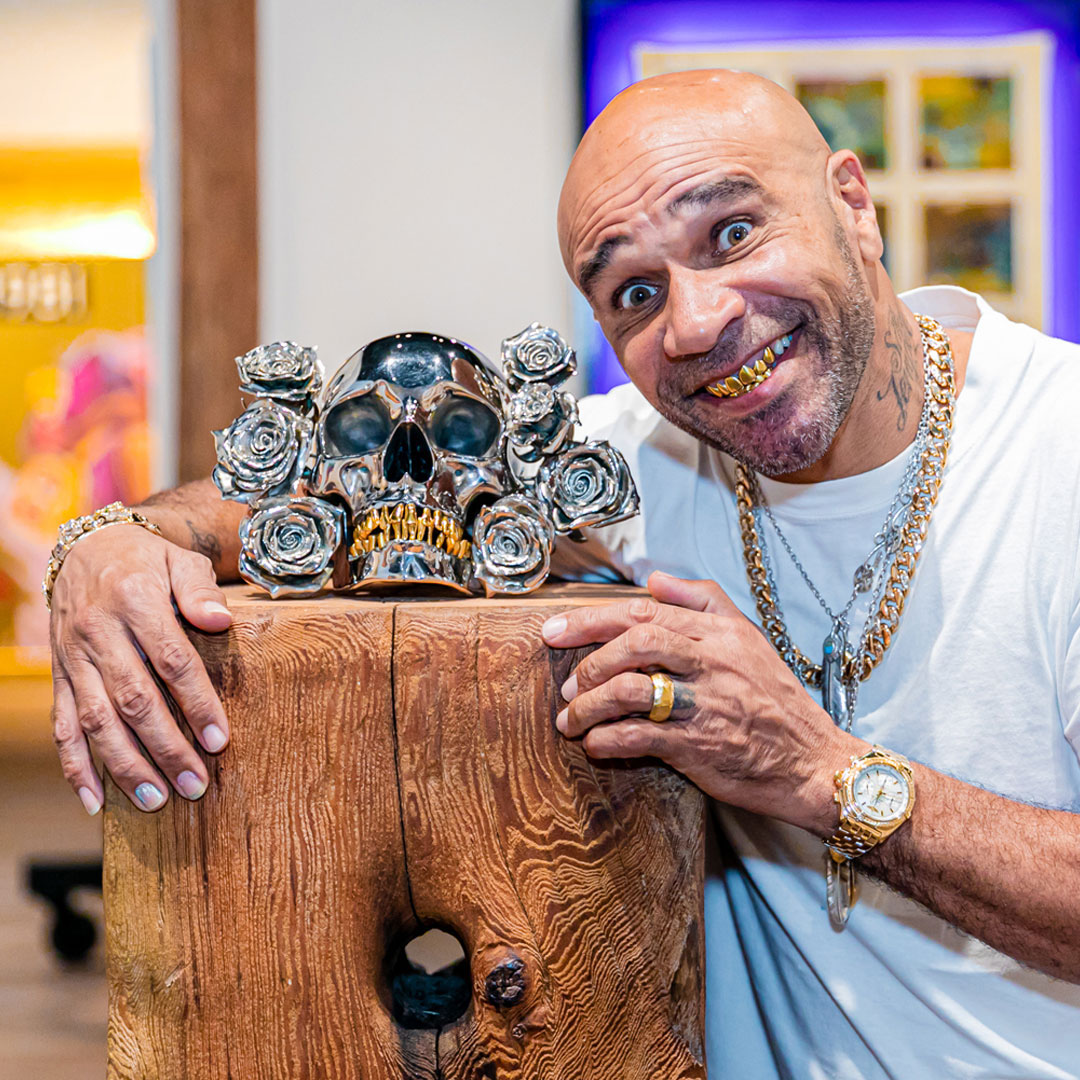
3 / 7 · The landmarks
The history is often told through its landmarks. Goldie's Timeless. Shy FX's Original Nuttah. Roni Size and Reprazent. LTJ Bukem and the atmospheric movement around Good Looking Records. Photek's extraordinary approach to rhythm and space. Ed Rush and Optical pushing the music towards something harder and more futuristic. Fabio and Grooverider carrying the sound through radio and clubs. Metalheadz, V Recordings and Hospital becoming institutions in their own right.
Then there is Calibre, whose body of work shows how much emotional range can exist inside a music built around speed.
Yet the story gets more interesting when you stop treating drum and bass as one genre. It was never really one thing. It was an argument between sounds: reggae and dub, funk and soul, hip hop and techno, jazz and house, all run through samplers, drum machines and ever more powerful computers.
Take something that already exists and make something that could not have existed before.
4 / 7 · The Amen break
The Amen break is almost the perfect symbol. A tiny fragment of an old recording became raw material for a new culture. Producers did not simply listen to it, they dissected it: moved individual hits around, changed the tempo, reversed sounds, filtered, distorted and stretched them, then buried them under basslines. A few seconds became thousands of possibilities.
Technology made that possible, but technology alone did not create the music. The culture did.
London was central, and so were the people who built their own routes when the conventional ones were closed. Pirate radio mattered. Independent record shops mattered. Small labels and bedroom studios mattered. So did the relationship between the DJ and the crowd.
This was music that grew through circulation.
%20(Kiel%2066.676).jpg?width=1000)

5 / 7 · The circuit
A record could travel from a studio to a pressing plant, from a record shop to a DJ's bag, from a pirate broadcast to a cassette, and finally into a club where hundreds or thousands of people heard it for the first time. Tracks were tested in real rooms. Reactions mattered. Exclusives mattered. Mystery mattered.
Before social media turned every release into a campaign, drum and bass had its own system for building anticipation.
It also grew up close to British urban life. Its speed reflected the city, its intensity the clubs, its bass the sound systems. Its sense of movement belonged to a generation growing up around changing technology, changing neighbourhoods and changing musical identities.
Tracks were tested in real rooms.
6 / 7 · The pressure
It would be a mistake to reduce drum and bass to darkness and aggression. Some of its most enduring music is remarkably human. There is melancholy in the best liquid records, tenderness in a vocal sitting above a rolling break, and a particular British restraint that lets a beautiful melody exist without turning sentimental.
Then there is the other side: the pressure, the bass, the moment a DJ changes the track and a whole room moves as one organism.
That physical response is fundamental. Drum and bass is something to experience at volume. The sub bass is part of the composition. So is the space between the drums, and so is the anticipation before the drop. Rhythm is not just keeping time. A breakbeat can feel restless, a bassline almost architectural, a snare an event.


Photos: Chase & Status, Amnesia Ibiza · Sub Focus, Toxicab · High Contrast, Bizzurp · DJ Hype, Adam J Roberts · Danny Byrd, 4ELEVEN Images · Bru-C, Don't Flop Entertainment

7 / 7 · What comes next
That is why the music has been so hard to assimilate. Pop has borrowed it, advertising has absorbed it, film, television and festival line-ups have used it, and the culture still exists on its own terms. Not because it rejects the outside world, its whole history is built on absorbing outside influence, but because it transforms whatever it touches. It does not assimilate easily. It mutates.
The old records stay relevant and the new records do not have to sound like them. A teenager can find Goldie, Calibre, Shy FX or LTJ Bukem and move straight into sounds that would have been unimaginable when those records came out. The lineage is a living conversation, now stretching across Europe, North America, Australia and New Zealand, with its centre of gravity still unmistakably British.
The question is no longer whether the music will survive. It is what it becomes next, and its history says the answer will come from somewhere unexpected: a bedroom studio, a new generation that has never known a world without streaming, an old sound someone hears differently for the first time.
The Amen break was only six seconds long. The culture it helped create has lasted for generations. And it is still moving.
Thirty Years of Hospital
1 / 8 · 1996
Hospital Records was founded in 1996, and in 2026 the label marks thirty years. Wikipedia describes it as a British independent record label based in East London, primarily releasing drum and bass, started by Tony Colman, who records as London Elektricity, and Chris Goss, and grown to become one of the most well known labels within UK dance music.
Thirty years is a long time in independent music. Since 1996 the industry has moved from vinyl and CDs to downloads to streaming, and the genre has changed shape many times. Hospital has stayed recognisable through all of it, with a catalogue that spans liquid, rolling and darker sounds.
This Deep Dive marks the anniversary. It looks at what the label is, who it has worked with, what it is doing to celebrate, and why it has lasted. It is a story about taste and consistency, but also about the way a label can become a community.
It also arrives in a month with plenty to see: the Hospital30 box set is listed for 6 November, and the label's birthday nights continue across the autumn.
2 / 8 · The sound
The label is closely associated with melodic, soulful drum and bass. For many fans it is the home of liquid, with its warm chords, soulful vocals and rolling drums. But that description captures only part of it. Hospital has always released music from across the genre, from deep rollers to heavier dancefloor tunes, and its roster has been broader than any single style.
That range is an important part of its character. A label that only released one sound would have found it difficult to survive thirty years of changing fashions. By supporting several kinds of drum and bass, Hospital has been able to follow the scene's changes without losing its identity.
Its identity is also a matter of tone. The label has long championed vocals and live musicianship, and its records tend to be crafted with care. When a record arrives on Hospital, listeners expect it to be well made, and that expectation is a form of trust.
It is also a label that likes people. Its events, its social media and its approach to fans have always had a warmth that is part of the appeal.
Photos: High Contrast, Bizzurp · Logistics, · Nu:Tone, Tom Godber
3 / 8 · The artists
Over thirty years, many of the scene's best loved names have released on the label. Wikipedia lists Netsky, Camo and Krooked, Logistics, Nu:Tone, Metrik, Fred V and Grafix, High Contrast and S.P.Y among those who have been home there, with London Elektricity himself as a founder and performer.
More recently, a newer generation has come through, including Solah and Hoax, whose releases we have covered in this magazine, as well as Gabriella Bongo and others. The label's anniversary box set draws on these names, listing among its artists Netsky, Grafix, S.P.Y, Etherwood, Nu:Logic, Lens, Hoax and Gabriella Bongo.
Taken together, the roster shows how the label has moved with the scene. Early signings were part of liquid's first wave, later ones brought it to a bigger audience, and newer ones are shaping where it goes next.
Many of these artists have gone on to major careers beyond the label, but their records on Hospital remain a core part of their catalogues.
4 / 8 · A group of businesses
Hospital is more than a record label. In Shoreditch, East London, it runs a publishing company called Songs in the Key of Knife, and a worldwide events brand called Hospitality. Until the end of 2019 it also ran an experimental label, Med School Music.
That structure is an example of how a label can grow beyond records into a set of activities that support its artists. Publishing helps artists earn from their compositions. Events build an audience that records alone cannot reach. An experimental imprint provides room for ideas that might not suit the main label.
Hospitality, the events brand, is one of the best known names in British drum and bass. Nights billed under it are often built around a set of the label's artists, and its weekender takes over holiday camps and festival sites. For many fans, the brand works like a promise.
Running these businesses together gives the label stability, and the stability gives it room to take risks on new artists.
5 / 8 · Hospital30
To mark the anniversary, the label has issued Hospital30, a box set of five white vinyl 12 inch records holding thirty tracks of new material and catalogue remixes. Its own shop gives the release date as 6 November 2026 and lists the set as sold out, so check the label's pages and your local record shop for any remaining stock.
The label names Netsky, Grafix, S.P.Y, Etherwood, Nu:Logic, Lens, Hoax and Gabriella Bongo among the artists, with more besides. The box has a two piece lift off lid in a matte finish, and inside the package the label lists a personal letter, a Hospital logo wall art print and a sticker set, with relief varnish on the box and sleeves.
It is the kind of release that speaks to the scene's love of physical music. In a streaming age, a numbered white vinyl box is a collector's item, and its sale shows how strongly fans still value objects.
It also works as a statement. A label that can sell out a box set of this kind has an audience that cares about it as an institution, not just as a source of tunes.
6 / 8 · The party
A birthday needs a party. Hospital30 is also the name of the label's night in Brighton, listed for Friday 23 October 2026 at Quarters from 9pm to 3am, with Metrik, Hoax, Solah, Gabriella Bongo and Emma B, hosted by PVC.
Anniversary events continue through the autumn, and we will report on further dates as they are announced. For fans who have followed the label for years, the nights are a chance to celebrate with the people who share the taste.
The party is also a reminder of why labels matter. A night under a label's name brings people together who might otherwise never meet. They share a taste, a set of artists and a sense of belonging, and the label becomes a community.
If you can get to one of the events, it is well worth the trip. The artists play to an audience that knows their records, and the atmosphere reflects thirty years of goodwill.
7 / 8 · Why thirty years matters
Few independent dance labels last three decades. Doing so means adapting to every change in the way people buy and hear music, from vinyl to CDs to downloads to streaming, while still finding new artists and keeping an audience.
Hospital's longevity has several explanations. It has kept a clear sense of what it likes. It has supported artists across their careers. It has built an events brand that brings fans together. And it has stayed independent, which gives it the freedom to follow its own taste.
There is also the question of luck, which every long surviving label would admit to. But luck usually follows hard work, and Hospital's record suggests a lot of both.
The lesson for anyone starting a label, or building a scene, is that consistency, care and community matter more than any single hit.
8 / 8 · Where to dig
Hospital's own Bandcamp and streaming pages hold the catalogue, and its SoundCloud account is a good way to hear new releases. For a quick tour, play one tune from each era and listen to how the label's sound moves while keeping its identity.
Read the interviews and features that mark the anniversary, and follow the label's social accounts for news of further events. Our own coverage of the box set and the Brighton night has the dates and sources.
Explore the artists. Start with the names above and follow them through their catalogues, noticing how each one brings something different to the label's sound.
And if you have not been to a Hospitality night, make this the year. It is one of the clearest ways to understand what thirty years of work can build.
Our Top 10.
Ten drum and bass tunes released in January 2026, picked by the D-N-B desk, each on Apple Music.
Satisfaction Skank (High Contrast Remix)
Fatboy Slim & The Rolling Stones
Satisfaction Skank
Artwork: Apple Music
OUTTASPACE (Primate Edit)
Sigma, Primate, Kazhi & VALLO
OUTTASPACE (Primate Edit)
Artwork: Apple Music
Say It Ain't So
The Senka Project, Dub Phizix & DRS
Say It Ain't So
Artwork: Apple Music
Blimp
Skeptical
Blimp
Artwork: Apple Music
Lightweight
Teddy Killerz
Lightweight
Artwork: Apple Music
Family Matters
Chimpo
Changing Lights
Artwork: Apple Music
247
Monrroe & Duskee
247
Artwork: Apple Music
Maybe Never
Thing & RABACORE
Maybe Never
Artwork: Apple Music
Zedband
Dutta
Zedband
Artwork: Apple Music
Bang In Trouble / Jacobs
Heist
Bang In Trouble
Artwork: Apple Music
Ten drum and bass tunes released in February 2026, picked by the D-N-B desk, each on Apple Music.
Composure
Logistics & Charlotte X
Composure
Artwork: Apple Music
How I Do It Like That
Makoto
How I Do It Like That
Artwork: Apple Music
Holding On
Friction & Sam Harper
Holding On
Artwork: Apple Music
Aurora Blue / Make You Understand
Submorphics & Whitt
Aurora Blue
Artwork: Apple Music
Rack 'em Up / Swamp Thing
Total Science & Kublai
Rack 'em Up
Artwork: Apple Music
Chase The Lights (feat. Marns)
Kings Of The Rollers
Chase The Lights (feat. Marns)
Artwork: Apple Music
DAY ONE (Edits)
Sigma, Scrufizzer, Jamakabi & YUSSI
CHARGIE (YUSSI Edit)
Artwork: Apple Music
The Never Going Home
The Senka Project, Dub Phizix & DRS
Never Going Home
Artwork: Apple Music
B Switch
Vibe Chemistry
B Switch
Artwork: Apple Music
Could I Be / What U Done
Teddy Killerz
Could I Be
Artwork: Apple Music
Ten drum and bass tunes released in March 2026, picked by the D-N-B desk, each on Apple Music.
Come Alive (Grafix Remix)
Netsky
Come Alive (Grafix Remix)
Artwork: Apple Music
Earthling
Logistics
Earthling
Artwork: Apple Music
Scrambled Eggs VIP
Roni Size
Scrambled Eggs VIP
Artwork: Apple Music
Out the Dance
Lenzman, Redeyes & Danny Sanchez
Out the Dance
Artwork: Apple Music
Time (Nu: Tone Remix)
Solah
Time (Nu: Tone Remix)
Artwork: Apple Music
003 Remixes
Ricky Force
The Touch (Coco Bryce Remix)
Artwork: Apple Music
BURNT THE BEAN
Vibe Chemistry, Elro, Devilman & Local
BURNT THE BEAN
Artwork: Apple Music
LEGENDARY STATUS (feat. Klaudia Keziah)
Sigma, Danny Byrd, KURUPT FM & Natty D
LEGENDARY STATUS (feat. Klaudia Keziah)
Artwork: Apple Music
Pacifica (Burr Oak Remix)
Spor
Pacifica
Artwork: Apple Music
Time's Up EP
Taxman
E.Y.G
Artwork: Apple Music
Ten drum and bass tunes released in April 2026, picked by the D-N-B desk, each on Apple Music.
My Story (feat. Katya Gabeli)
Roni Size & Vikter Duplaix
My Story (feat. Katya Gabeli)
Artwork: Apple Music
Unity
Visages & Alix Perez
Unity
Artwork: Apple Music
Love You More
Rudimental
Love You More
Artwork: Apple Music
Lovesick
Solah, Makoto, Hugh Hardie & Azotix
Lovesick
Artwork: Apple Music
Pretender
Emily Makis & Pola & Bryson
Pretender
Artwork: Apple Music
Half Life
Dub Phizix
Half Life
Artwork: Apple Music
Designer Manipulation
Response & Pliskin
Conscious
Artwork: Apple Music
Days That I Once Knew
Technimatic
Days That I Once Knew
Artwork: Apple Music
Source Code EP
Armodine & Miss Ros
Loving U Is Wrong ft MISS ROS
Artwork: Apple Music
Give it to Me
Harmony
Give it to Me
Artwork: Apple Music
Ten drum and bass tunes released in May 2026, picked by the D-N-B desk, each on Apple Music.
Hyperspace
Logistics
Hyperspace
Artwork: Apple Music
In Between
Hugh Hardie & EXEA
In Between
Artwork: Apple Music
It's Alright, I Feel It (feat. Vanessa Freeman)
DJ Marky & Makoto
It's Alright, I Feel It (feat. Vanessa Freeman)
Artwork: Apple Music
Heart Is So Heavy
Lenzman, Redeyes, Pinty & Natacha Kanga
Heart Is So Heavy
Artwork: Apple Music
NEED U NOW
Sigma, Dutch & Graft & Professor Green
NEED U NOW
Artwork: Apple Music
Wings
Solah & Hoax
Wings
Artwork: Apple Music
Overgrown: LIVE
Pola & Bryson & goddard.
Listen (Live Mix)
Artwork: Apple Music
Onslaught
Zero T, Steo & Onj
Onslaught
Artwork: Apple Music
What a House (VIP) / Dance With Me (VIP)
Harmony
What a House (VIP)
Artwork: Apple Music
The Set
Amoss & Minor Forms
The Set
Artwork: Apple Music
Ten drum and bass tunes released in June 2026, picked by the D-N-B desk, each on Apple Music.
Snakebite
Hugh Hardie & Circumference
Snakebite
Artwork: Apple Music
Stay
Friction
Stay
Artwork: Apple Music
So Right
Break
So Right
Artwork: Apple Music
Combination Style
Alix Perez
Combination Style
Artwork: Apple Music
Rotation (Spirit Remix)
Total Science
Rotation (Spirit Remix)
Artwork: Apple Music
We Blessy
Fox, Lenzman & Satl
We Blessy
Artwork: Apple Music
BACK 2 LIFE (feat. Liv Campbell)
Sigma, Soul II Soul, Capo Lee & Zimma
BACK 2 LIFE (feat. Liv Campbell)
Artwork: Apple Music
Forever
Solah & Break
Forever
Artwork: Apple Music
Want It (feat. IYAMAH) [Mefjus Remix]
Pola & Bryson
Want It (feat. IYAMAH)
Artwork: Apple Music
Bitter Green
Dub Phizix
Bitter Green
Artwork: Apple Music
Ten drum and bass tunes released in July 2026, picked by the D-N-B desk, each on Apple Music.
Jungle Daze (feat. Natalie Williams)
Goldie
Jungle Daze (feat. Natalie Williams)
Artwork: Apple Music
Chant (Lens & Unglued Remix)
Logistics
Chant (Lens & Unglued Remix)
Artwork: Apple Music
Hoverfly
London Elektricity & Serpnt
Hoverfly
Artwork: Apple Music
Overgrown (Deluxe Edition)
Pola & Bryson
Want It (feat. IYAMAH) [Mefjus Remix]
Artwork: Apple Music
Watchman
Dub Phizix
Watchman
Artwork: Apple Music
Noise Cut EP
Phace
My ADHD & U
Artwork: Apple Music
Hugh Hardie & Friends EP
Hugh Hardie & Makoto
Got Me Trippin'
Artwork: Apple Music
X Years VA
Alix Perez
Reminisce
Artwork: Apple Music
Hospital Records: Forza Horizon 6
Nu:Tone & Solah
Clarity
Artwork: Apple Music
Where Did You Go
Pola & Bryson & DRIIA
Where Did You Go
Artwork: Apple Music
Ten drum and bass tunes released in August 2026, picked by the D-N-B desk, each on Apple Music.
Lead Dem
Friction & IRAH
Lead Dem
Artwork: Apple Music
What You Sayin'?
EVABEE, DRS & Submorphics
What You Sayin'?
Artwork: Apple Music
Rewind
Turno, Gino & Nersha
Rewind
Artwork: Apple Music
Deadly Deep Subs (Remix) / Baby Your
Dillinja
Deadly Deep Subs (Remix)
Artwork: Apple Music
Better Days
Gabriella Bongo, Makoto, Blocksberg & PVC
Better Days
Artwork: Apple Music
Run A Red Light (Logistics Remix)
Everything But the Girl
Run A Red Light (Logistics Remix)
Artwork: Apple Music
Ghost Division / What You Sayin'?
Submorphics
Ghost Division
Artwork: Apple Music
Free (Hoax Remix)
Emz, Nasser UK & Valor
Free (Hoax Remix)
Artwork: Apple Music
Send Shots
Rudimental, Original Koffee & Winny
Send Shots
Artwork: Apple Music
Dimension
Harmony
Dimension
Artwork: Apple Music
Ten drum and bass tunes released in September 2026, picked by the D-N-B desk, each on Apple Music.
Wrong Crowd EP
Bou & Friction
The Block
Artwork: Apple Music
Genesis
Mefjus & Annix
Genesis
Artwork: Apple Music
The Holy Grail
Kings Of The Rollers
Forever
Artwork: Apple Music
Sovereign
DJ Zinc
Sovereign
Artwork: Apple Music
Back to My Roots EP
Turno
One by One
Artwork: Apple Music
how it used to be
Hybrid Minds, Nixxy Rain & Dame
how it used to be
Artwork: Apple Music
Quema Quema
Etherwood & Hugh Hardie
Quema Quema
Artwork: Apple Music
Dignity / L.M.S.U.G.F
Enei
Dignity
Artwork: Apple Music
Get Low / All Junglists
Break
Get Low
Artwork: Apple Music
Memory & Collapse EP
Submorphics
Cold Patterns
Artwork: Apple Music
Ten of the biggest drum & bass tunes right now, picked by the D-N-B desk from the Beatport Top 100, one tune per release and all on Apple Music. Checked 4 October 2026.
Vibing Out
Darude & Dimension
Sandstorm (Dimension Extended Remix)
Beatport #1 · Artwork: Apple Music
Gossip
Friction & Bou
The Block
Beatport #2 · Artwork: Apple Music
Symmetry Recordings
Break
Get Low
Beatport #4 · Artwork: Apple Music
State Of The Art
Sota
Poison
Beatport #6 · Artwork: Apple Music
Subsonic : Frequencies
Subsonic
Genesis II
Beatport #10 · Artwork: Apple Music
Shogun Audio
Pola & Bryson ft. Harriet Jaxxon
This Time
Beatport #11 · Artwork: Apple Music
Crucast
Loboski, Grace Barton & T-Lex
Options (Extended Mix)
Beatport #12 · Artwork: Apple Music
Defected
Soul Central & Clipz
Strings Of Life (Extended Junglist Mix)
Beatport #13 · Artwork: Apple Music
Dance Macabre
Benny L & Simula
Dead Orbit
Beatport #14 · Artwork: Apple Music
Dance Macabre
Enei
Dignity
Beatport #15 · Artwork: Apple Music
Ten drum and bass tunes to hear going into November 2026: the newest releases and those listed ahead of release on Apple Music, picked by the D-N-B desk. Updated through the month.
Pattys
Turno & Dreps
Pattys
Artwork: Apple Music
Memory & Collapse
Submorphics & Flaco
Indigo Silence
Artwork: Apple Music
Moonstruck
Villem
Moonstruck
Artwork: Apple Music
COUNTRY GREAZE
Sigma, Dutch & Graft & Professor Green
NEED U NOW
Artwork: Apple Music
Send Shots (N:Fostell Remix)
Rudimental, Original Koffee, Winny & N.Fostell
Send Shots (N:Fostell Remix)
Artwork: Apple Music
The Black Light Project (Part 2)
Kolectiv
Music That We Feel
Artwork: Apple Music
Echoes of Us
Technimatic
Echoes of Us
Artwork: Apple Music
Every Day / Romulus
Ray Keith
Every Day
Artwork: Apple Music
Gin Walk
Anile
Gin Walk
Artwork: Apple Music
LOCKDOWN
Blooom & Duskee
LOCKDOWN
Artwork: Apple Music
The D-N-B store
This is the official D-N-B store.
Tees, hoodies, caps and more, made for the jungle and drum and bass crowd.
The shop lives at shop.d-n-b.co.uk.
Visit the store →




Top 10 SoundCloud Tracks.
January 2026, picked by the D-N-B desk. Press play on any of them.
February 2026, picked by the D-N-B desk. Press play on any of them.
March 2026, picked by the D-N-B desk. Press play on any of them.
April 2026, picked by the D-N-B desk. Press play on any of them.
May 2026, picked by the D-N-B desk. Press play on any of them.
June 2026, picked by the D-N-B desk. Press play on any of them.
July 2026, picked by the D-N-B desk. Press play on any of them.
August 2026, picked by the D-N-B desk. Press play on any of them.
September 2026, picked by the D-N-B desk. Press play on any of them.
October 2026, picked by the D-N-B desk. Press play on any of them.
November 2026: the newest uploads so far, picked by the D-N-B desk and updated through the month. Press play on any of them.
Tickets, this month.
All drum & bass nights →![Halloween Rave w/ Andy C, Sota, [IVY] + more poster](https://onthedoor.uk/events/andy-c-halloween-cardiff.jpg) Sat 31 Oct 2026
Sat 31 Oct 2026Halloween Rave w/ Andy C, Sota, [IVY] + more
The Great Hall · Cardiff
Tickets on On The Door →
![Metalheadz [Halloween]: Doc Scott, Loxy, J Majik & More poster](https://onthedoor.uk/events/metalheadz-halloween-doc-scott-loxy-j-majik-more-bristol.webp) Sat 31 Oct 2026
Sat 31 Oct 2026Metalheadz [Halloween]: Doc Scott, Loxy, J Majik & More
Clock Factory · Bristol
Tickets on On The Door →
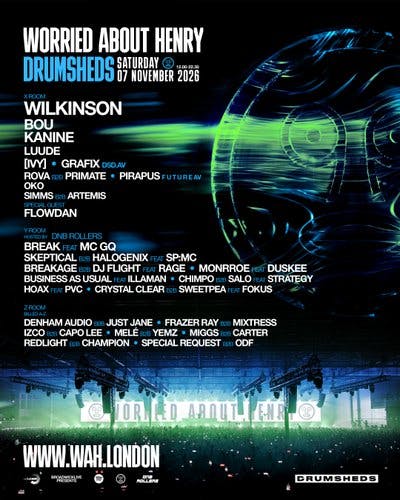 Sat 7 Nov 2026
WAH Drumsheds 2026: Wilkinson + 40 more artists
Drumsheds · London
Tickets on On The Door →
 Sat 14 Nov 2026
CALLING ALL: Moving Shadow / Over Shadow Special
St Bart's Church · Reading
Tickets on On The Door →
Right now.
D-N-B Desk · 27 October 2026
What’s on this week
- Tue 27 Oct 2026MANIA U18 x DUB LAB : BOURNEMOUTH + MACKY GEEThe Vault Nightclub · Bournemouth
- Fri 30 Oct 2026Critical Sound: ManchesterHidden · Manchester
- Fri 30 Oct 2026HIT & RUN presents Critical SoundHidden · Manchester
- Fri 30 Oct 2026Jungle Cakes Halloween 360Brixton Jamm · London
Latest news.
All news →
Features · 30 Jan 2026
Drum and bass releases in January 2026: the full round-up
14 releases and 23 tracks matched to Apple Music, listed week by week with labels, track counts and running times.
D-N-B Desk
Releases · 30 Jan 2026
Fatboy Slim, The Rolling Stones & High Contrast releases Satisfaction Skank (High...
3 tracks on Southern Fried Records & ABKCO Music & Records, Inc, out on 30 January 2026: the track list, the label, the artist and where it sits in this month's issue.
D-N-B Desk

Releases · 30 Jan 2026
Sigma, Primate, Kazhi & VALLO releases OUTTASPACE (Primate Edit)
A drum and bass single on DAY ONES MUSIC, out on 30 January 2026, with the story of the artist, the label and where it sits in this month's issue.
D-N-B Desk
Features · 29 Jan 2026
How to listen to drum and bass at home: speakers, sub bass and your room
The music is built for big systems, but you can get a great deal out of a modest set up. Where to put the speakers, what a sub does and how to protect the neighbours.
D-N-B Desk

Releases · 28 Jan 2026
Chimpo, PABLÓGYAL, Inqus & Jack Banner releases Family Matters
4 tracks on Tomorrow's Soul, out on 28 January 2026: the track list, the label, the artist and where it sits in this month's issue.
D-N-B Desk

Releases · 16 Jan 2026
Monrroe & Duskee releases 247
A drum and bass single on Shogun Audio, out on 16 January 2026, with the story of the artist, the label and where it sits in this month's issue.
D-N-B Desk

Releases · 16 Jan 2026
Sigma, Mali-Koa & Ekko & Sidetrack releases CHEMICALS (Ekko & Sidetrack Edit)
A drum and bass single on DAY ONES MUSIC, out on 16 January 2026, with the story of the artist, the label and where it sits in this month's issue.
D-N-B Desk
Features · 15 Jan 2026
Jump-up drum and bass explained: the sound built for the crowd
Big hooks, bouncing bass and an MC with a microphone. Jump-up is the part of the genre that is designed first and foremost to get a room moving.
D-N-B Desk
Features · 27 Feb 2026
Drum and bass releases in February 2026: the full round-up
29 releases and 65 tracks matched to Apple Music, listed week by week with labels, track counts and running times.
D-N-B Desk
Releases · 27 Feb 2026
Logistics & Charlotte X releases Composure
A drum and bass single on Hospital Records, out on 27 February 2026, with the story of the artist, the label and where it sits in this month's issue.
D-N-B Desk

Releases · 27 Feb 2026
Sigma releases DAY ONE (Edits)
17 tracks on DAY ONES MUSIC, out on 27 February 2026: the track list, the label, the artist and where it sits in this month's issue.
D-N-B Desk

Releases · 27 Feb 2026
Total Science & Kublai releases Rack 'em Up / Swamp Thing
2 tracks on Computer Integrated Audio, out on 27 February 2026: the track list, the label, the artist and where it sits in this month's issue.
D-N-B Desk
Features · 26 Feb 2026
The anatomy of a drop: how a drum and bass track builds and lands
Intro, build, riser, the moment of silence and the drop itself. A plain guide to the structure that makes a dancefloor react.
D-N-B Desk

Releases · 26 Feb 2026
Kings Of The Rollers releases Chase The Lights (feat. Marns)
A drum and bass single on Souped Up Records, out on 26 February 2026, with the story of the artist, the label and where it sits in this month's issue.
D-N-B Desk

Releases · 20 Feb 2026
Makoto releases How I Do It Like That
A drum and bass single on Human Elements, out on 20 February 2026, with the story of the artist, the label and where it sits in this month's issue.
D-N-B Desk
Features · 19 Feb 2026
The MC in drum and bass: what the microphone actually does
Few electronic scenes treat the person on the mic as part of the music. In drum and bass, the MC is there to guide the room, and the tradition goes back to the sound system.
D-N-B Desk

Features · 31 Mar 2026
Drum and bass releases in March 2026: the full round-up
20 releases and 62 tracks matched to Apple Music, listed week by week with labels, track counts and running times.
D-N-B Desk

Releases · 27 Mar 2026
Sigma, Danny Byrd, KURUPT FM & Natty D releases LEGENDARY STATUS (feat. Klaudia Keziah)
A drum and bass single on DAY ONES MUSIC, out on 27 March 2026, with the story of the artist, the label and where it sits in this month's issue.
D-N-B Desk

Releases · 26 Mar 2026
Logistics releases Earthling
24 tracks on Hospital Records, out on 26 March 2026: the track list, the label, the artist and where it sits in this month's issue.
D-N-B Desk
Features · 26 Mar 2026
Where to buy drum and bass music in 2026: labels, shops and what they pay artists
Bandcamp pages, label shops, streaming, download stores and vinyl. How to find the music and, if you want to, how to make sure the people who made it are paid.
D-N-B Desk

Releases · 20 Mar 2026
Vibe Chemistry, Elro, Devilman & Local releases BURNT THE BEAN
A drum and bass single on Vibe Chemistry Records, out on 20 March 2026, with the story of the artist, the label and where it sits in this month's issue.
D-N-B Desk
Releases · 19 Mar 2026
Netsky releases Come Alive (Grafix Remix)
A drum and bass single on Hospital Records, out on 19 March 2026, with the story of the artist, the label and where it sits in this month's issue.
D-N-B Desk
Features · 12 Mar 2026
Vinyl, CDJs and controllers: what drum and bass DJs actually play on
The format wars never ended. Each has its place, and each shapes how a DJ plays. A fair comparison, from the bedroom to the big stage.
D-N-B Desk
Releases · 6 Mar 2026
Lenzman, Redeyes & Danny Sanchez releases Out the Dance
A drum and bass single on The North Quarter, out on 6 March 2026, with the story of the artist, the label and where it sits in this month's issue.
D-N-B Desk

Features · 30 Apr 2026
Drum and bass releases in April 2026: the full round-up
21 releases and 39 tracks matched to Apple Music, listed week by week with labels, track counts and running times.
D-N-B Desk

Releases · 24 Apr 2026
Response & Pliskin releases Designer Manipulation
4 tracks on Northern Front Records, out on 24 April 2026: the track list, the label, the artist and where it sits in this month's issue.
D-N-B Desk
Releases · 24 Apr 2026
Roni Size & Vikter Duplaix releases My Story (feat. Katya Gabeli)
2 tracks on Mansion Sounds, out on 24 April 2026: the track list, the label, the artist and where it sits in this month's issue.
D-N-B Desk
Features · 23 Apr 2026
How to read a drum and bass flyer: headliners, rooms, hosts and set times
b2b, LP launch, hosted by, room two. A short glossary of everything on a poster, and what it tells you about the night.
D-N-B Desk

Releases · 17 Apr 2026
Rudimental releases Love You More
A drum and bass single on Disorder Records Limited under exclusive license to UMG Recordings, Inc. A Capitol Records/Disorder release, out on 17 April 2026, with the story of the artist, the label and where it sits in this month's issue.
D-N-B Desk

Releases · 17 Apr 2026
Technimatic releases Days That I Once Knew
A drum and bass single on Technimatic Music, out on 17 April 2026, with the story of the artist, the label and where it sits in this month's issue.
D-N-B Desk
Features · 16 Apr 2026
Protecting your hearing on the dancefloor: a practical guide for drum and bass fans
Loud music is part of the culture, and so is looking after your ears. Earplugs, breaks and a few habits that let you enjoy nights for decades.
D-N-B Desk

Releases · 9 Apr 2026
Visages & Alix Perez releases Unity
A drum and bass single on 1985 Music, out on 9 April 2026, with the story of the artist, the label and where it sits in this month's issue.
D-N-B Desk

Releases · 29 May 2026
DJ Marky & Makoto releases It's Alright, I Feel It (feat. Vanessa Freeman)
A drum and bass single on Hospital Records, out on 29 May 2026, with the story of the artist, the label and where it sits in this month's issue.
D-N-B Desk

Features · 29 May 2026
Drum and bass releases in May 2026: the full round-up
21 releases and 64 tracks matched to Apple Music, listed week by week with labels, track counts and running times.
D-N-B Desk
Features · 28 May 2026
Sound design 101: the three sounds that make a drum and bass track
The break, the sub and the Reese. What each does, where each comes from and how a producer balances them.
D-N-B Desk

Releases · 28 May 2026
Zero T, Steo & Onj releases Onslaught
A drum and bass single on Hospital Records, out on 28 May 2026, with the story of the artist, the label and where it sits in this month's issue.
D-N-B Desk
Releases · 21 May 2026
Logistics releases Hyperspace
A drum and bass single on Hospital Records, out on 21 May 2026, with the story of the artist, the label and where it sits in this month's issue.
D-N-B Desk

Releases · 15 May 2026
Lenzman, Redeyes, Pinty & Natacha Kanga releases Heart Is So Heavy
A drum and bass single on The North Quarter, out on 15 May 2026, with the story of the artist, the label and where it sits in this month's issue.
D-N-B Desk

Releases · 15 May 2026
Pola & Bryson releases Overgrown: LIVE
5 tracks on Shogun Audio, out on 15 May 2026: the track list, the label, the artist and where it sits in this month's issue.
D-N-B Desk

Releases · 15 May 2026
Sigma, Dutch & Graft & Professor Green releases NEED U NOW
A drum and bass single on DAY ONES MUSIC, out on 15 May 2026, with the story of the artist, the label and where it sits in this month's issue.
D-N-B Desk

Features · 30 Jun 2026
Drum and bass releases in June 2026: the full round-up
18 releases and 61 tracks matched to Apple Music, listed week by week with labels, track counts and running times.
D-N-B Desk

Releases · 26 Jun 2026
Friction releases Stay
A drum and bass single on Elevate Records, out on 26 June 2026, with the story of the artist, the label and where it sits in this month's issue.
D-N-B Desk

Releases · 25 Jun 2026
Alix Perez releases Combination Style
A drum and bass single on 1985 Music, out on 25 June 2026, with the story of the artist, the label and where it sits in this month's issue.
D-N-B Desk

Releases · 19 Jun 2026
Sigma, Soul II Soul, Capo Lee & Zimma releases BACK 2 LIFE (feat. Liv Campbell)
A drum and bass single on DAY ONES MUSIC, out on 19 June 2026, with the story of the artist, the label and where it sits in this month's issue.
D-N-B Desk

Releases · 12 Jun 2026
Total Science releases Rotation (Spirit Remix)
A drum and bass single on Computer Integrated Audio, out on 12 June 2026, with the story of the artist, the label and where it sits in this month's issue.
D-N-B Desk

Releases · 11 Jun 2026
Fox, Lenzman & Satl releases We Blessy
A drum and bass single on 1985 Music, out on 11 June 2026, with the story of the artist, the label and where it sits in this month's issue.
D-N-B Desk

Releases · 5 Jun 2026
Break releases So Right
A drum and bass single on Symmetry Recordings, out on 5 June 2026, with the story of the artist, the label and where it sits in this month's issue.
D-N-B Desk
Releases · 5 Jun 2026
Hugh Hardie & Circumference releases Snakebite
A drum and bass single on Soulvent Records, out on 5 June 2026, with the story of the artist, the label and where it sits in this month's issue.
D-N-B Desk

Features · 31 Jul 2026
Drum and bass releases in July 2026: the full round-up
29 releases and 77 tracks matched to Apple Music, listed week by week with labels, track counts and running times.
D-N-B Desk

Releases · 31 Jul 2026
Hugh Hardie releases Hugh Hardie & Friends
4 tracks on Soulvent Records, out on 31 July 2026: the track list, the label, the artist and where it sits in this month's issue.
D-N-B Desk

Releases · 31 Jul 2026
Pola & Bryson & DRIIA releases Where Did You Go
A drum and bass single on Shogun Audio, out on 31 July 2026, with the story of the artist, the label and where it sits in this month's issue.
D-N-B Desk
Features · 30 Jul 2026
A map of drum and bass: the places that made the sound
From a spare room in Stevenage to a house in Dollis Hill, from a Shoreditch office to a studio in Groningen: where the labels, producers and stations came from.
D-N-B Desk

Releases · 24 Jul 2026
Document One releases Cheap Shot VIP
2 tracks on Elevate Records, out on 24 July 2026: the track list, the label, the artist and where it sits in this month's issue.
D-N-B Desk

Releases · 22 Jul 2026
Goldie releases Jungle Daze (feat. Natalie Williams)
A drum and bass single on Goldie Inc. under exclusive license to LDN Records, out on 22 July 2026, with the story of the artist, the label and where it sits in this month's issue.
D-N-B Desk

Releases · 16 Jul 2026
London Elektricity & Serpnt releases Hoverfly
A drum and bass single on Fast Soul Music, out on 16 July 2026, with the story of the artist, the label and where it sits in this month's issue.
D-N-B Desk

Releases · 9 Jul 2026
Logistics releases Chant (Lens & Unglued Remix)
A drum and bass single on 2026 Hospital Records, out on 9 July 2026, with the story of the artist, the label and where it sits in this month's issue.
D-N-B Desk

Features · 31 Aug 2026
Drum and bass releases in August 2026: the full round-up
23 releases and 67 tracks matched to Apple Music, listed week by week with labels, track counts and running times.
D-N-B Desk
Features · 28 Aug 2026
Outlook Festival: bass music in the forts and on the boats of Croatia
Born as a subsidiary of a Leeds night, the festival moved to Tisno in 2020 and is known for stages in tunnels, a moat and boat parties.
D-N-B Desk

Releases · 28 Aug 2026
Submorphics releases Ghost Division / What You Sayin'?
2 tracks on Space Cadet, out on 28 August 2026: the track list, the label, the artist and where it sits in this month's issue.
D-N-B Desk

Releases · 26 Aug 2026
Rudimental, Original Koffee & Winny releases Send Shots
A drum and bass single on Black Butter Records, out on 26 August 2026, with the story of the artist, the label and where it sits in this month's issue.
D-N-B Desk

Releases · 21 Aug 2026
Hobzee releases Things Are Different Now
5 tracks on Metalheadz, out on 21 August 2026: the track list, the label, the artist and where it sits in this month's issue.
D-N-B Desk

Releases · 20 Aug 2026
Gabriella Bongo, Makoto, Blocksberg & PVC releases Better Days
A drum and bass single on Hospital Records, out on 20 August 2026, with the story of the artist, the label and where it sits in this month's issue.
D-N-B Desk
Features · 18 Aug 2026
Drum and bass and video games: from Devil May Cry to Forza Horizon
Noisia wrote a game soundtrack and a Counter-Strike music kit, and Hospital Records has put out a Forza Horizon 6 compilation. A short history of the sound in games.
D-N-B Desk

Releases · 14 Aug 2026
Dillinja releases Deadly Deep Subs (Remix) / Baby Your
2 tracks on Deep Jungle Records, out on 14 August 2026: the track list, the label, the artist and where it sits in this month's issue.
D-N-B Desk
News · 5 Oct 2026 · Brighton
Beyond Boundaries gives Brighton a 15,000 capacity festival with Wilkinson
The new one day festival at Stanmer Park on Saturday 26 September put drum and bass in the Brighton open air next to Max Dean, MK and JME.
D-N-B Desk
News · 5 Oct 2026 · Hampshire
Mucky Weekender put Goldie, Roni Size, DJ Hype and Doc Scott in a Hampshire field
The September weekender at Vicarage Farm mixed jungle and drum and bass heritage names with reggae, breaks, house and live music.
D-N-B Desk
News · 5 Oct 2026 · Malta
WAH Malta returned for three days of drum and bass with more than 100 artists
Worried About Henry took its Malta festival to 4 to 6 September, with Shy FX, Wilkinson and Hybrid Minds among the names.
D-N-B Desk

Features · 30 Sept 2026
Drum and bass releases in September 2026: the full round-up
19 releases and 45 tracks matched to Apple Music, listed week by week with labels, track counts and running times.
D-N-B Desk

Releases · 25 Sept 2026
Rudimental, Original Koffee & Winny releases Send Shots (Jungle VIP)
A drum and bass single on Black Butter Records, out on 25 September 2026, with the story of the artist, the label and where it sits in this month's issue.
D-N-B Desk
Releases · 25 Sept 2026
Submorphics releases Cold Patterns
A drum and bass single on Rosebay Music, out on 25 September 2026, with the story of the artist, the label and where it sits in this month's issue.
D-N-B Desk

Features · 24 Sept 2026
Netsky: the Belgian producer who joined Hospital Records
Boris Daenen signed to the label in late 2009, released a self titled debut album on 31 May 2010 and followed it with 2 in June 2012.
D-N-B Desk

Releases · 18 Sept 2026
Break releases Get Low / All Junglists
2 tracks on Symmetry Recordings, out on 18 September 2026: the track list, the label, the artist and where it sits in this month's issue.
D-N-B Desk
Features · 12 Oct 2026
Drum and bass in numbers: the facts behind thirty years of the sound
Tempos, chart positions, founding dates, crowd sizes and prices, each with its source. A reference you can quote.
D-N-B Desk
Features · 8 Oct 2026
Nia Archives: the artist at the front of the drum and bass revival
Born in Bradford in 1999, she released three self released EPs before her debut album Silence Is Loud reached number 16 on the UK Albums Chart.
D-N-B Desk
News · 5 Oct 2026 · UK
Shy FX in Leeds, Bou and Crossy in Brighton: the 23 and 24 October drum and bass weekend
Twelve nights across England, Scotland and Wales are listed on On The Door for the Friday and Saturday before Halloween.
D-N-B Desk

News · 4 Oct 2026 · Edinburgh
Bryan Gee plays a two hour set at The Bongo Club on 9 October
Disorder presents the V Recordings founder in Edinburgh on Friday 9 October, with Leesha, Harry Jackson and Jawshuar in support.
D-N-B Desk
News · 4 Oct 2026
Chase and Status release Generic Everything on 9 October, with an arena tour for 2027
The duo's seventh studio album arrives on Friday 9 October with guests including J Hus, Little Simz and Skrillex, and they have announced UK and European arena dates for February to April 2027.
D-N-B Desk

News · 4 Oct 2026
Critical Music takes Hospital30 to Nottingham and Critical Sound to Brighton in December
Two December Fridays on the label's own events page: a Hospital30 x Critical Sound night at Stealth in Nottingham and a Kasra, QZB and Spectral night at Volks in Brighton.
D-N-B Desk

News · 4 Oct 2026 · London
Critical Sound runs three rooms at fabric on 23 October as ticket tiers sell out
Critical Music's night runs from 11pm to 6am on Friday 23 October with Kasra, En:vy, VISLA, QZB, Spectral and Waeys among the names, and the organisers say several ticket tiers have gone.
D-N-B Desk

News · 4 Oct 2026
DnB Allstars announce New Year's Eve at Troxy in London, presale opens 7 October
Thursday 31 December, 9pm to 4am at the Limehouse venue, with Jungle Cakes, Ed Solo, Deekline, Benny Page, a live Amplify PA and more.
D-N-B Desk
Features · 16 Oct 2026
The drum and bass calendar to Christmas: the nights, tours and dates to book now
From fabric on 23 October to Troxy on New Year's Eve, fourteen dates we have confirmed from the organisers' own pages, in order.
D-N-B Desk

Features · 16 Oct 2026
Drum and bass releases going into November 2026: the round-up
23 releases and 69 tracks matched to Apple Music, listed week by week with labels, track counts and running times.
D-N-B Desk

Releases · 16 Oct 2026
Kolectiv releases The Black Light Project (Part 2)
3 tracks on Metalheadz, out on 2 October 2026: the track list, the label, the artist and where it sits in this month's issue.
D-N-B Desk
Features · 16 Oct 2026
Noisia: three producers from Groningen and their influence
Nik Roos, Martijn van Sonderen and Thijs de Vlieger have made drum and bass, dubstep, breakbeat and house, and wrote music for video games.
D-N-B Desk

Releases · 16 Oct 2026
Rudimental, Original Koffee, Winny & N.Fostell releases Send Shots (N:Fostell Remix)
A drum and bass single on Black Butter Records, out on 9 October 2026, with the story of the artist, the label and where it sits in this month's issue.
D-N-B Desk

Releases · 16 Oct 2026
Sigma & Sweetie Irie releases ANOTHER ONE
A drum and bass single on DAY ONES MUSIC, out on 2 October 2026, with the story of the artist, the label and where it sits in this month's issue.
D-N-B Desk

Releases · 16 Oct 2026
Sigma, Basslayerz & Scrufizzer releases SODP
A drum and bass single on DAY ONES MUSIC, out on 30 October 2026, with the story of the artist, the label and where it sits in this month's issue.
D-N-B Desk

Releases · 16 Oct 2026
Sigma releases COUNTRY GREAZE
12 tracks on DAY ONES MUSIC, out on 13 November 2026: the track list, the label, the artist and where it sits in this month's issue.
D-N-B Desk
The studio behind D-N-B
We built this site. We can build yours.
K4o5 builds high performance digital systems for ambitious brands: bespoke web design, custom development, brand identity, UI/UX and motion design.
- Web design
- Custom development
- Brand identity
- UI / UX
- Motion
Inside The Modern
D&B Movement
For more than three decades, drum & bass has remained one of the most influential forces in electronic music. What began in the UK’s underground rave culture has grown into a worldwide movement, shaping club culture, festivals and production techniques across every corner of dance music.
The genre’s greatest strength has always been its ability to evolve, from soulful liquid rollers and cinematic atmospherics to heavyweight dancefloor weapons and cutting-edge neurofunk, without losing the energy that made it unique in the first place.
What keeps it moving is how the scene is built. Record shops, radio, promoters, small labels and bedroom producers still feed one another, and a tune can go from a laptop to a packed room in a matter of weeks. That short distance between making a record and testing it on a crowd is a big part of why the sound keeps renewing itself.
The range is wide. Rollers sit deep and hypnotic, neurofunk turns cold and mechanical, jump up goes straight for the dancefloor and liquid brings melody and soul. One night can take in all of it, and the best DJs move between them without losing the room.
It is also why the audience is so broad. People who were there at the start stand beside people who found the music on a playlist last year. Festivals, club residencies, radio shows and online communities give drum & bass more ways in than at any point in its history, and D-N-B.CO.UK exists to follow all of it.
In 2026, the scene is stronger than ever. Independent labels continue to discover new talent, established artists remain at the forefront of innovation, and dedicated communities around the world are proving that drum & bass is far more than a genre, it is a culture built on creativity, progression and connection.
The New Generation
Discover emerging producers, breakthrough releases and the artists pushing drum & bass into its next chapter.
The Engines Behind The Scene
Exploring the independent labels and influential imprints shaping the future of underground music.
From Clubs To Festivals
Coverage from venues, events and communities keeping drum & bass culture alive around the globe.
What’s on.
All events →- 27OctMANIA U18 x DUB LAB : BOURNEMOUTH + MACKY GEEThe Vault Nightclub · BournemouthTickets on On The Door →
- 30OctCritical Sound: ManchesterHidden · ManchesterTickets on On The Door →
- 30OctHIT & RUN presents Critical SoundHidden · ManchesterTickets on On The Door →
- 30OctJungle Cakes Haunted House - Thirty3hz - GuildfordThirty3Hz · GuildfordTickets on On The Door →
- 30OctSquare One Halloween: KANINE, DELTA HEAVY +moreThe Nest · NottinghamTickets on On The Door →
- 31OctJungle Cakes Halloween - The Vault - BournemouthThe Vault Bournemouth · BournemouthTickets on On The Door →
Fifty Cuts
Deep.
50 tracks. 5 sounds. One D-N-B desk.
Contributor mix of the week
Get yourself listed in our featured slot. Submit your SoundCloud mix to [email protected]. If we like it, we will show it.
The desk’s five
The Weapon
Skeptical
Blimp
From Blimp, released on 1 January. 4 of its tracks are in the fifty.
The Roller
Fatboy Slim & The Rolling Stones
Satisfaction Skank
From Satisfaction Skank (High Contrast Remix), released on 30 January.
The One Nobody's Talking About
Wyld Dogz, John B & The Young Punx
The Bomb (These Sounds Fall Into My Mind)
From Like A Tattoo, released on 16 January. 3 of its tracks are in the fifty. Wyld Dogz has 2 tracks in the fifty.
The Classic
Wyld Dogz, John B & The Young Punx
Not In Love
From Like A Tattoo, released on 16 January. 3 of its tracks are in the fifty.
The Surprise
The Senka Project, Dub Phizix & DRS
Say It Ain't So
A single released on 14 January.
25 drum and bass tracks released in January 2026 that we could match to an Apple Music listing on 16 October 2026, with more added as they are matched. Artwork: Apple Music.
The desk’s five
The Weapon
Submorphics & Whitt
Aurora Blue
From Aurora Blue / Make You Understand, released on 13 February. 2 of its tracks are in the fifty.
The Roller
Friction & Sam Harper
Holding On
A single released on 13 February.
The One Nobody's Talking About
neurofunk
Synaptic Fracture
A single released on 13 February. neurofunk has 1 track in the fifty.
The Classic
Danny Byrd, Sigma, Basslayerz & Serum
SUPERSTYLIN' (Serum Edit)
From DAY ONE (Edits), released on 27 February. 5 of its tracks are in the fifty.
The Surprise
Logistics & Charlotte X
Composure
A single released on 27 February.
Drum and bass released in February 2026, each matched to an Apple Music listing on 16 October 2026. Artwork: Apple Music.
The desk’s five
The Weapon
Current Value
What It Be
From The Incubation, Vol. 1, released on 27 March. 3 of its tracks are in the fifty.
The Roller
Spor
Pacifica
From Pacifica (Burr Oak Remix), released on 20 March.
The One Nobody's Talking About
Jonny L
Area 51
From Politix, released on 13 March. 5 of its tracks are in the fifty. Jonny L has 5 tracks in the fifty.
The Classic
Serum
Chop House
From Chop House (Remixes), released on 26 March.
The Surprise
Logistics
Spacetime
From Earthling, released on 26 March. 5 of its tracks are in the fifty.
30 drum and bass tracks released in March 2026 that we could match to an Apple Music listing on 16 October 2026, with more added as they are matched. Artwork: Apple Music.
The desk’s five
The Weapon
Visages & Alix Perez
Unity
A single released on 9 April.
The Roller
Dub Phizix
Half Life
A single released on 8 April.
The One Nobody's Talking About
John B, Magellan Starchild & The Young Punx
In For The Kill (Dnb Version)
From In For The Kill, released on 28 April. 2 of its tracks are in the fifty. John B has 5 tracks in the fifty.
The Classic
Roni Size & Vikter Duplaix
My Story (feat. Katya Gabeli)
From My Story (feat. Katya Gabeli), released on 24 April.
The Surprise
Rudimental
Love You More
A single released on 17 April.
29 drum and bass tracks released in April 2026 that we could match to an Apple Music listing on 16 October 2026, with more added as they are matched. Artwork: Apple Music.
The desk’s five
The Weapon
iBOT
Sinister
From Calypso Allstars Volume 7, released on 15 May. 4 of its tracks are in the fifty.
The Roller
Harmony & Orca
Swarm
From Swarm, released on 4 May. 4 of its tracks are in the fifty.
The One Nobody's Talking About
neurofunk
Neurofunk Mainframe
From Neurofunk, released on 25 May. 5 of its tracks are in the fifty. neurofunk has 5 tracks in the fifty.
The Classic
KOMPACT
Skin
From Calypso Allstars Volume 7, released on 15 May. 4 of its tracks are in the fifty.
The Surprise
Logistics
Hyperspace
A single released on 21 May.
31 drum and bass tracks released in May 2026 that we could match to an Apple Music listing on 16 October 2026, with more added as they are matched. Artwork: Apple Music.
The desk’s five
The Weapon
Alix Perez
Combination Style
A single released on 25 June.
The Roller
Friction
Stay
A single released on 26 June.
The One Nobody's Talking About
John B, Magellan Starchild & The Young Punx
Seven Nation Army
From Seven Nation Army (Drum and bass version), released on 11 June. 3 of its tracks are in the fifty. John B has 3 tracks in the fifty.
The Classic
Keeno
Persevere
From LIGHT / DARK, released on 26 June. 5 of its tracks are in the fifty.
The Surprise
Hugh Hardie & Circumference
Snakebite
A single released on 5 June.
27 drum and bass tracks released in June 2026 that we could match to an Apple Music listing on 16 October 2026, with more added as they are matched. Artwork: Apple Music.
The desk’s five
The Weapon
Phace
Noise Cut
From Noise Cut, released on 1 July. 5 of its tracks are in the fifty.
The Roller
Document One
Cheap Shot
From Cheap Shot VIP, released on 24 July.
The One Nobody's Talking About
DJ Die
New Way
From New Way, released on 1 July. 2 of its tracks are in the fifty. DJ Die has 2 tracks in the fifty.
The Classic
Goldie
Jungle Daze (feat. Natalie Williams)
A single released on 22 July.
The Surprise
London Elektricity & Serpnt
Hoverfly
A single released on 16 July.
Drum and bass released in July 2026, each matched to an Apple Music listing on 16 October 2026. Artwork: Apple Music.
The desk’s five
The Weapon
Andy C
Come Together (feat. Mali-Koa)
A single released on 11 August, with an extended mix alongside it on Apple Music.
The Roller
Dimension & Subsonic
Ghost Town
A single released on 19 August.
The One Nobody's Talking About
Hobzee & Response
Things Are Different Now
The title track of Hobzee's EP, released on 21 August. Two of its tracks are in the fifty.
The Classic
Coco Bryce
Our Darkness
The title track of the Our Darkness EP, released on 29 August. Coco Bryce has two tracks in the fifty.
The Surprise
Vibe Chemistry
Blue Sky
From the album Serotonin. Four Vibe Chemistry tracks are in the fifty.
Drum and bass released in August 2026, each matched to an Apple Music listing on 5 October 2026. Artwork: Apple Music.
The desk’s five
The Weapon
Mefjus & Annix
Genesis
A single released on 23 September.
The Roller
Bou & Friction
The Block
From the Wrong Crowd EP, released on 25 September. Five of its tracks are in the fifty.
The One Nobody's Talking About
Submorphics
Cold Patterns
From the Memory & Collapse EP, released in September. Submorphics has two tracks in the fifty.
The Classic
Kings Of The Rollers
Forever
From the album The Holy Grail, which Apple lists for 3 September.
The Surprise
Turno
One by One
From the Back to My Roots EP, released on 17 September. Four of its tracks are in the fifty.
Drum and bass released in September 2026, each matched to an Apple Music listing on 5 October 2026. Artwork: Apple Music.
The desk’s five
The Weapon
Noisia
Concussion
From Noisia Presents Ten Years of Noisia. One of four Noisia tracks in the fifty.
The Roller
Calibre
Even If
Calibre has three tracks in the fifty: Even If, Second Sun and Mr Maverick.
The One Nobody's Talking About
Enei
Dignity
A 2026 single, listed on Apple Music. Enei's Routine is in the fifty too.
The Classic
Shy FX & UK Apache
Original Nuttah
A jungle landmark. Its 25th anniversary edit, Original Nuttah 25, is on Apple Music.
The Surprise
London Elektricity
Just One Second
From the album Syncopated City, a liquid track in a list that otherwise leans on newer names.
Every track matched to an Apple Music listing on 4 October 2026. Artwork: Apple Music.
The desk’s five
The Weapon
Submorphics & Flaco
Indigo Silence
From Memory & Collapse, released on 2 October. 5 of its tracks are in the fifty.
The Roller
Turno & Dreps
Pattys
A single released on 8 October.
The One Nobody's Talking About
The Prototypes
Chicago 2046
A single released on 6 November. The Prototypes has 1 track in the fifty.
The Classic
Ray Keith
Every Day
From Every Day / Romulus, released on 13 November. 2 of its tracks are in the fifty.
The Surprise
Kolectiv
Music That We Feel
From The Black Light Project (Part 2), released on 2 October. 3 of its tracks are in the fifty.
The newest drum and bass releases, and those listed ahead of release, going into November 2026, each matched to an Apple Music listing on 16 October 2026. Updated through the month. Artwork: Apple Music.
RAM Records
soundcloud.com/ramrecords
Hospital Records
soundcloud.com/hospitalrecords
Shogun Audio
soundcloud.com/shogunaudio
Playaz Recordings
soundcloud.com/playazrecordings
Photo: public domain. Cover art: Apple Music.
Goldie
A graffiti artist who walked into jungle and made it sound like a film score. Everything that came after owes him something.
Goldie arrived in the jungle and drum and bass scene from graffiti, and brought a visual artist's sense of scale to the music. He released singles as Rufige Kru and Metalheads, and co-founded Metalheadz, one of the genre's most important labels.
His 1995 album Timeless became the record that introduced many people to the whole scene, and three decades on it still gets played at full volume in rooms where the genre is argued over.
Early years
Goldie was born in Walsall, England, and raised in Wolverhampton, and is of Jamaican and Scottish heritage. As a child he was put up for adoption and grew up in childcare homes and with several foster families. In the 1980s he was a member of a breakdance crew called Westside, based in the Whitmore Reans and Heath Town areas of Wolverhampton, and he later joined another crew in Birmingham. That culture of dancing, graffiti and music is where his artistic life began.
Graffiti, Rage and Reinforced
He first became known as a graffiti artist, and the rave scene gave him a new direction. The club Rage, which had a profound effect on him, led to a meeting with DJ Kemistry, who introduced him to 4hero's Reinforced Records. There he did design and artwork and then A and R, the work of finding and developing artists. It was a practical education in how a label works.
Metalheadz and Timeless
In 1994, with Kemistry and Storm, Goldie founded Metalheadz, whose skull and headphones logo became one of the most recognisable in dance music. The following year, his debut album Timeless was released through FFRR, with Rob Playford handling much of the programming and production. It entered the UK chart at number 7 and is widely regarded as groundbreaking.
Beyond the music
Goldie has also built a career as an actor, with credits including the James Bond film The World Is Not Enough, Snatch and EastEnders. For many people outside the scene, he is the face of drum and bass, and his willingness to talk about the culture has made him one of its most visible ambassadors.
Label
MetalheadzLandmark
Timeless, 1995The facts
- Born Clifford Joseph Price on 19 September 1965. An English music producer, DJ, graffiti artist and actor.
- Timeless entered the UK album chart at number 7. It was released in 1995.
- Co-founded Metalheadz. He also released singles as Rufige Kru and Metalheads.
- Acting credits. They include the James Bond film The World Is Not Enough, Snatch and EastEnders.
Source: Wikipedia, Goldie.
Listen
Photo: Eoindkelly, CC BY-SA 3.0. Cover art: Apple Music.
Roni Size
From a Bristol youth club to the Mercury Prize in one decade, and the proof that drum and bass could win the room and the critics.
Roni Size came to prominence in 1997 as the founder and frontman of Roni Size and Reprazent, a drum and bass collective from Bristol. That year they won the Mercury Prize for their debut studio album New Forms.
Before that he grew up in the St Andrews area of Bristol, learned the basics of production at a local youth club and later set up a home studio. Full Cycle Records came out of that world.
A Bristol upbringing
Roni Size grew up in the St Andrews area of Bristol, the son of Jamaican immigrants, and cites reggae as one of his earliest influences. He was expelled from school at sixteen and started going to house parties run by The Wild Bunch, the Bristol sound system that was a predecessor of Massive Attack. The sound system culture of the city, with its reggae and dub heritage, shaped his taste.
The youth club
He learned the basics of production at his local youth club, the Sefton Park basement project, which provided record players, a mixing desk, drum machines and samplers. He also worked with his brother's large collection of Studio One records and later set up a home studio, buying a sampler. It is a reminder that equipment access, even in modest form, can launch a career.
Full Cycle and Reprazent
His future partner Krust had been a member of the Fresh 4, whose Wishing on a Star reached the UK top 10 in late 1989. Williams, Krust, Suv and DJ Die founded Full Cycle Records. Roni Size and Reprazent's New Forms, released on 23 June 1997 through Talkin' Loud, won the Mercury Prize and went platinum, with four singles that all entered the UK singles chart.
Why it still matters
New Forms is one of the few records that people from outside the scene can name. For a genre that grew up in clubs and on pirate radio, a prize from the wider music world was a moment of recognition, and it is still cited as a landmark for British music.
City
BristolPrize
Mercury, 1997The facts
- Born Ryan Owen Granville Williams on 29 October 1969. An English DJ and record producer.
- Won the 1997 Mercury Prize. For New Forms, the debut studio album of Roni Size and Reprazent.
- Grew up in Bristol. The son of Jamaican immigrants, he cites reggae as an early influence.
- Full Cycle Records. Founded with Krust, Suv and DJ Die.
Source: Wikipedia, Roni Size.
Listen
Photo: Lazz R, CC BY 2.0. Cover art: Apple Music.
LTJ Bukem
The calm in the storm: jungle's most atmospheric voice, and the producer who made a whole generation want to listen at home.
LTJ Bukem and his label Good Looking are most associated with the jazzy, atmospheric side of jungle. Trained as a classical pianist, he discovered jazz fusion as a teenager and played in a jazz funk band before turning to DJing.
His track Horizons, from 1995, became one of his most popular releases, and the sound he championed went on to influence much of what is now called liquid drum and bass.
A pianist who found jazz
LTJ Bukem was trained as a classical pianist and discovered jazz fusion as a teenager, playing for a time in a jazz funk band. By the late 1980s he had decided to become a DJ, and he gained fame in the early 1990s rave scene. That musical education shaped everything he made.
The records
Wikipedia lists a run of early tracks: Logical Progression in 1991, Demon's Theme in 1992, and Atlantis and Music in 1993. His most notable release was Horizons in 1995. Together they trace the development of an atmospheric, jazz tinged style that would influence a generation of producers.
Good Looking
In 1991 he founded Good Looking Records, which specialises in jazz influenced, atmospheric intelligent drum and bass. Its artists have included Blame, Photek, Blu Mar Ten, Seba, Source Direct, Makoto, Q Project and Peshay. The label's grey sleeves and its sense of identity made it one of the most distinctive imprints in the scene.
The name
The Bukem part of his name came from the nickname Book 'em, taken from the television show Hawaii Five-O, in which the detective Steve McGarrett says Book 'em, Danno when somebody is arrested. The LTJ does not stand for anything.
Label
Good LookingSound
AtmosphericThe facts
- Born Daniel Williamson on 20 September 1967. A British jungle musician, producer and DJ.
- A trained classical pianist. He discovered jazz fusion in his teens.
- The name. Bukem comes from the nickname Book 'em, taken from Hawaii Five-O. The LTJ does not stand for anything.
- Horizons, 1995. His most notable release, according to his biography.
Source: Wikipedia, LTJ Bukem.
Listen
Photo: Stephen West, CC BY 2.0. Cover art: Apple Music.
Andy C
Three decades of precision on the decks, and the label boss behind some of the biggest names in the genre.
Andy C found early success in 1993 with the track Valley of the Shadows, made as Origin Unknown with Ant Miles. He later co-founded RAM Records, which has signed artists including Chase and Status, Loadstar, Sub Focus and Wilkinson.
In 2012 he introduced Andy C Alive, a live show that combines his mixing with synchronised visuals, and he has played festivals and venues across Europe and North America.
Origin Unknown
Andy C first found success in 1993 with Valley of the Shadows, made as Origin Unknown with Ant Miles. The track is sometimes known as 31 Seconds or Long Dark Tunnel because of the samples it uses. It was the start of a partnership that would lead directly to the creation of RAM Records.
RAM Records
RAM was established in 1992 by Andy C with the help of Ant Miles, and it is run by Andy C and his business partner Scott Bourne, also known as Red One. In its early 2000s years, Moving Fusion's Turbulence helped move it forward, and its club night at The End in London lasted eleven years until the club closed in December 2008.
Body Rock and the charts
In 2001 he worked with Shimon on the single Body Rock, which reached number 28 on the UK singles chart in January 2002. The record used a swinging rhythm and distinctive synthesiser leads, and it showed that his sound could reach beyond the underground.
Andy C Alive
In 2012 he introduced Andy C Alive, a live show combining DJ mixing with synchronised visuals. He has performed at venues and festivals in Europe and North America, including SXSW in Texas and Brixton Academy in London, and at festivals including Creamfields, Global Gathering, Sunbeat and Electric Daisy Carnival.
Label
RAM RecordsShow
Andy C AliveThe facts
- Born Andrew Michael Clarke on 7 April 1976. An English DJ and record producer.
- Valley of the Shadows, 1993. Made as Origin Unknown with Ant Miles.
- Body Rock. A 2001 single with Shimon that reached number 28 on the UK singles chart in January 2002.
- Co-founder of RAM Records. A drum and bass label whose roster has included Sub Focus and Wilkinson.
Source: Wikipedia, Andy C.
Listen
Photo: Alkivar, CC BY-SA 2.5. Cover art: Apple Music.
Shy FX
Ragga jungle at its most celebrated, and a rare drum and bass producer who also had a top ten single.
Shy FX is a British DJ and producer from London who specialises in drum and bass and jungle. His debut record, Jungle Love, came out in 1992, and in 1994 he released Original Nuttah, with vocals from MC UK Apache, a ragga jungle track that cemented his place in the scene.
In 2001 he and T Power had a hit with Shake Ur Body, featuring the vocalist Di, which reached number 7 on the UK singles chart.
Jungle Love
Shy FX's first record, Jungle Love, was released in 1992 on the Permission to Dance label. Soon afterwards he signed to Sound of the Underground, often shortened to S.O.U.R., and in 1994 he released Original Nuttah, with vocals from MC UK Apache, which helped to cement his position as a mainstay of the scene.
The story of Original Nuttah
UK Apache wrote the lyrics in the late 1980s, and they were dubbed over a Shy FX track called Gangsta Kid. After approval from peers, UK Apache contacted Shy FX and the head of Sour Records to record an official version. It became one of the earliest records in the genre to reach the UK top 40, and in 2022 Rolling Stone included it in its list of the 200 Greatest Dance Songs of All Time.
Shake Ur Body
Shy FX has collaborated with T Power, both as Ebony Dubsters and as Shy FX and T Power. Their 2001 track Shake Ur Body, with the vocalist Di, was a number 7 hit in the UK singles chart. Released on Positiva, a subsidiary of EMI, it helped to popularise drum and bass as a mainstream genre. The duo's album Set It Off followed in 2002 on Pete Tong's label FFRR.
Why he matters
Shy FX shows how far a producer can travel inside one genre: from raw jungle in 1992 to a number 7 hit nine years later. His records keep returning to the sound system, and that is why they still work in a crowd.
City
LondonClassic
Original NuttahThe facts
- Born in London. Real name Andre Williams.
- Debut record in 1992. Jungle Love, on the Permission to Dance label.
- Original Nuttah, 1994. With MC UK Apache, released on Sound of the Underground.
- Shake Ur Body, 2001. With T Power and vocalist Di, a number 7 hit on the UK singles chart.
Source: Wikipedia, Shy FX.
Listen
Photo: Adam J Roberts, CC BY-SA 4.0. Cover art: Apple Music.
DJ Hype
A scratch and mix technician from the early days of the rave, and a bridge between hardcore, jungle and drum and bass.
DJ Hype began helping on a Hackney sound system as a teenager in 1982, and started producing in 1989. He hosted a show on the pirate station Fantasy FM and later one on the legal station Kiss 100, and was known for his mixing and scratching.
By 1994 he was a big name at breakbeat hardcore and jungle raves, and his label Ganja Records gained popularity.
The Hackney sound system
DJ Hype's first involvement in music came in 1982, when as a teenager he assisted PJ and Smiley on their sound system Heatwave in Hackney, East London. The system evolved into Shut Up and Dance, one of the best known names in British hardcore. It was an apprenticeship in exactly the culture that would produce jungle.
From hardcore to jungle
Hype began producing in 1989, engineering and co producing tracks for Kickin Records, Strictly Underground and Suburban Base, including Exorcist and The Bee. The producer Wookie has said Hype worked with The Scientist on The Bee to make one of the first jungle tunes to hit big. Suburban Base released his Shot in the Dark, which made the UK Singles Chart in 1993.
Radio and awards
He hosted a show on the pirate station Fantasy FM and was famed for his mixing and scratching skills. By 1994 he was a major name at breakbeat hardcore and jungle raves, winning Best Male DJ in 1994 and Best Radio DJ in 1995 at the Hardcore Awards, and hosting a show on the legal station Kiss 100.
Ganja Records
His Ganja Records label gained popularity in the scene. Hype remains a regular name on festival line-ups, and his career is an example of how a DJ can move from the hardcore rave to the modern drum and bass circuit without losing his audience.
Label
Ganja RecordsArea
East LondonThe facts
- Born Kevin Ford in May 1968. A British jungle and drum and bass producer and DJ.
- Started on a sound system in 1982. Helping PJ and Smiley on Heatwave in Hackney, which evolved into Shut Up and Dance.
- Shot in the Dark, 1993. Released on Suburban Base, it made the UK singles chart.
- Hardcore Awards. Best Male DJ in 1994 and Best Radio DJ in 1995.
Source: Wikipedia, DJ Hype.
Listen
Photo: Bizzurp, CC BY-SA 3.0. Cover art: Apple Music.
High Contrast
Film soundtracks, a Cardiff record shop and one of liquid drum and bass's most loved albums.
High Contrast, the stage name of Lincoln Barrett from Penarth near Cardiff, makes drum and bass that draws as much on film music as on the dancefloor. He cites the Clockwork Orange and Blade Runner soundtracks as defining influences.
His debut album True Colours came out on Hospital Records in June 2002, and his 2009 album Confidential reached gold certification in the UK.
A film obsessive
Lincoln Barrett was born in Penarth, near Cardiff, and grew up more interested in films and film soundtracks than in rock or pop. He cites Wendy Carlos's A Clockwork Orange soundtrack and Vangelis's Blade Runner soundtrack as defining musical influences. That cinematic sensibility is audible in everything he makes.
Finding drum and bass
While studying film making in Newport, he heard J Majik's Arabian Nights, which turned the then seventeen year old on to drum and bass. He worked in Cardiff's only electronic record shop, Catapult, and soon had a DJ residency at a Cardiff drum and bass night called Silent Running, where he played alongside artists such as Grooverider and London Elektricity.
Hospital Records
His debut album True Colours was released on Hospital Records in June 2002. His 2007 album Tough Guys Don't Dance is credited with bringing liquid drum and bass back to the mainstream, and his 2009 album Confidential reached BPI gold certification, meaning 100,000 sales in the UK.
Influence
Netsky has said that High Contrast's remix of Gold Digger was a major influence on him. High Contrast's work shows how a producer from a small Welsh town, with a love of film music, can shape a global sound.
Label
Hospital RecordsFrom
Penarth, WalesThe facts
- Born Lincoln Barrett on 18 September 1979. A Welsh producer and DJ.
- Turned on to drum and bass at 17. Hearing J Majik's Arabian Nights.
- A Cardiff record shop. He worked at Catapult, and held a residency at the night Silent Running.
- Confidential, 2009. Reached BPI gold certification, which means 100,000 units sold in the UK.
Source: Wikipedia, High Contrast.
Listen
Bellyman & Car Barz
Most artists build an audience through a label, a booking agent, or a lucky record. Bellyman built his from the back seat of a car. No stage, no lighting rig, no door policy, just a DJ at the wheel, a phone camera, and an MC who’d already spent years earning his stripes the traditional way, on the mic at raves and radio sets out of North West London.
Car Barz started as a simple idea: strip an MC set down to nothing but the bars. No crowd to play to, no visuals to hide behind, just skill, delivery, and chemistry with whoever’s driving the set. That simplicity turned out to be the format’s biggest strength. It’s cheap to film, effortless to share, and it puts the one thing DnB culture has always valued above all else, raw ability , front and centre with nowhere to hide.
“Globally recognised force in Drum & Bass. Award-winning entrepreneur, founder of The Bellyman Show, and creator of the influential Car Barz series.”
Bellyman · Artist Bio
The format scaled fast. Multiple seasons in, Car Barz had become an established fixture of the scene’s online culture, built on rotating line-ups of MCs and DJs, each episode a fresh pairing. Then came the International edition: North America’s leading drum & bass MCs, same format, same back seat, over 100,000 views on that instalment alone. What started as a London idea was suddenly a transatlantic one.
Dirty Phat Beats
Alongside Car Barz, Bellyman is a key figure in Dirty Phat Beats, the label and brand built with DJ Innovator, who has released across the drum & bass underground and hosts the Dirty Phat Beats Show every Monday, 2pm GMT, on lifefm.tv. It’s the kind of steady, weekly-grind visibility that built the scene long before social platforms existed, paired here with a format built entirely for them.
2026: The numbers behind the name
340,000 followers on Facebook alone, a consistent presence across Instagram, TikTok, YouTube and SoundCloud under the same @mcbellyman handle, and a merch line running independently at Bellymanmerch.bigcartel.com. Car Barz keeps expanding, new cities, new MCs, new DJs behind the wheel, and Bellyman’s own bars haven’t slowed down to make room for the entrepreneurship. Both keep growing at once.
A car was never meant to be a venue. Bellyman built one anyway, and drum & bass came along for the ride.
The Boy From Deanshanger Who Rewrote the Rules
Vibe Chemistry has charted at No. 5, played Ministry of Sound, and released one of the most ambitious DnB albums in years — all without losing an ounce of the underground credibility he started with. This summer, he’s only getting started.
There’s no obvious pipeline from Deanshanger to the top of the UK drum and bass chart. The village in Northamptonshire is about as far from the capital’s sweaty basement raves and warehouse rigs as you can get without actually leaving the country. But Alex Morisco-Tarr — the producer who trades under Vibe Chemistry — has never seemed particularly bothered by doing things the expected way.
He started posting music online in 2016. Raw, self-produced DnB tracks with a melodic sensibility that felt slightly out of step with what was circulating at the time. For five years he built like that: quietly, consistently, on his own terms — until DnB Allstars came calling in the summer of 2021.
“The track had real weight to it — proper low-end, and the emotional core that’s been in his production from the very beginning.”
D-N-B Editorial · on ‘Dancing Is Healing’What happened in April 2023 was something else altogether. “Dancing Is Healing”, his collaboration with Rudimental and Charlotte Plank, entered the UK Singles Chart at No. 5. Platinum-certified by the BPI. B-listed at BBC Radio 1. A Brit nomination followed.
Balance, and the Bravest Move Yet
The Balance album, released in August 2025 on his own MakeYourEra Records label, was the most ambitious thing he’d put his name to. Fourteen tracks spanning jump-up, dancefloor, melodic liquid — and, notably, house and garage.
2026: What He’s Building Now
A Ministry of Sound appearance in February was an early statement of intent. April brought “For Tonight”, firmly in the melodic liquid end of his range. The festival circuit is where to watch him this summer — with Balance still in rotation and new material reportedly taking shape in the studio.
The village in Northamptonshire is a long way from here. That’s rather the point.
Nicky Blackmarket
Nicky Blackmarket
“The baseline of modern UK electronic club culture wasn’t written in lines of code — it was forged in the heat of Soho basement vinyl shops. If you don’t respect the foundational weight of the plates, the whole ecosystem collapses.”
Nicky Blackmarket stands as a foundational architect of the global drum & bass movement. Operating from the counter of the legendary Blackmarket Records on Soho’s D’Arblay Street throughout the 1990s, he sat precisely at the epicentre of production, curation, and raw distribution — dictating the physical flow of test pressings and exclusive dubplates to the selectors who structured the sound of modern jungle.
In this definitive sit-down, the legendary pioneer tracks his relentless runtime behind the wheels of steel — from the pressure points of the original warehouse explosion to fostering fresh underground talent for tomorrow’s sound systems.
Soho Hub
BM RecordsSonic Engine
174 BPM EraThe facts
- Born Nicholas Andersson-Gylden in December 1967. A British drum and bass DJ and producer.
- Started at 14. He began DJing in the 1980s on electro, then played house parties and London pirate stations including Pulse FM and Eruption FM.
- Blackmarket Records, Soho. He co-owned the independent shop, later BM-Soho, and in the early 1990s set up a breakbeat department that grew into drum and bass.
- Nick OD. He has also made music under that name, including the Spam EP, though DJing has been his main work.
Source: Wikipedia, Nicky Blackmarket.
Listen
Photo: Amnesia Ibiza, CC BY 2.0. Cover art: Apple Music.
Chase & Status
Two producers who met at university, built a label and took drum and bass into the Brits.
Chase and Status are an English drum and bass duo, Saul Milton (Chase) and Will Kennard (Status), who formed in 2003 after meeting at university in Manchester. They have released seven studio albums and run the independent label MTA Records.
In 2024 they had a UK number one single with Backbone, a collaboration with Stormzy, and they won their first Brit Award, for Producer of the Year.
A meeting in Manchester
Chase and Status are Saul Milton, known as Chase, and Will Kennard, known as Status. They formed in 2003 after meeting at university in Manchester, and are from London. Andy Gangadeen is the drummer when the band performs live, and MC Rage performed with the group until he left in July 2021 to focus on solo work.
Collaboration
The duo have collaborated with major artists including Plan B, CeeLo Green, Rihanna, Example, Tinie Tempah and Stormzy. They run the independent label MTA Records, and in 2014 Will Kennard founded ELAM, which stands for East London Arts and Music, an educational project.
The mainstream
Their album 2 Ruff Vol. 1 included four singles in the UK top 40 at the same time, a feat not achieved by a UK band since 2010. In 2024 they had a UK number one single with Backbone, a collaboration with Stormzy, and won their first Brit Award, for Producer of the Year.
Recognition
In 2025 Kennard was awarded an MBE for services to music and to creative arts education. For a duo who began as drum and bass producers, it is a measure of how far the genre has travelled, and of how much of its energy now reaches people who have never been to a club.
Label
MTA RecordsBrit
Producer of the YearThe facts
- Formed in 2003. The duo met at university in Manchester and are from London.
- Seven studio albums. Including 2 Ruff Vol. 1, which had four singles in the UK top 40 at the same time.
- Backbone, 2024. A UK number one single, made with Stormzy.
- Will Kennard was awarded an MBE in 2025. For services to music and to creative arts education.
Source: Wikipedia, Chase and Status.
Listen
event→
The D-N-B store
Tees, hoodies and caps for the jungle crowd
Official D-N-B clothing. Twelve ranges, limited drops and the Red Edition.
Visit the D-N-B storeLive from Bulldog Studios — London — W3
D-N-B · Culture
Culture & History
D-N-B · Tickets on On The Door
What's On
D-N-B · Artists
The Artists
D-N-B · On Demand
Podcasts
D-N-B · Music
The Archives
D-N-B · Official Gear
Merch
D-N-B · Members Only
The Lounge
D-N-B · For Promoters
List Your Event
D-N-B · Culture
History & Heritage
D-N-B · Advertise
Advertise With Us
D-N-B · Network
The Network
D-N-B · Members Only
Studio Mixes
D-N-B · The chart
Our Top 10
D-N-B · On Screen